REVIEW · ZANZIBAR
Welcome Zanzibar : A Journey through time for the Old Town
Book on Viator →Operated by Funbeach Zanzibar Tours · Bookable on Viator
Stone Town is a maze you can navigate. This tour is interesting because it turns Zanzibar’s UNESCO-listed Old Town into a story you can follow, with clear explanations as you wind through alleyways and past iconic doors. I especially like Ally’s patient, detail-focused guidance and the way the walk hits major sights without feeling rushed. A key consideration: some focused stops can involve extra entrance fees, so you’ll want a little cash set aside.
You’ll start at Forodhani and finish back there, typically for about 2–3 hours of walking at an easy-to-moderate pace. It’s a private tour, so you can ask questions and adjust what you want to emphasize, whether you’re more into architecture, markets, or the darker chapters of the island’s past. The mobile ticket and free cancellation option make this a low-stress way to get oriented on arrival.
In This Review
- Key highlights
- Why Stone Town Feels Different With Ally as Your Guide
- Forodhani to the First Streets: Getting Oriented Fast
- UNESCO Stone Town and the “Look Up” Detail Most People Miss
- Old Fort: Portuguese Roots and Omani Use Over Time
- Darajani Bazaar Shopping Without the Tourist Headache
- The Old Slave Market Stop: Knowing What You’re Seeing
- Sultan’s Palace, House of Wonders, and Stone Town’s Big-Name Landmarks
- “Swahili House” Rooftop Viewing: When Extra Fees Are Worth It
- How the Tour Stays Comfortable: Pace, Weather, and Questions
- Value Math: Is $20 for 2–3 Hours Actually Fair?
- Who This Tour Is Best For (and When It Might Not Fit)
- Should You Book This Stone Town Time-Travel Walk?
- FAQ
- How long is the Stone Town Old Town tour?
- Is the tour private?
- Where do we meet, and where does the tour end?
- Is pickup included?
- What’s included in the price?
- Are there entrance fees during the tour?
- Is there free cancellation?
Key highlights
- Ally’s storytelling style: explanations that stay clear and easy to follow, even when you ask lots of questions
- Practical pace control: stops when you need them, with guidance that helps you keep moving confidently
- Iconic Stone Town sights: carved doors, major landmarks, and standout architecture details
- Darajani Bazaar time: a chance to browse spices and souvenirs with a local lens
- Old Slave Market context: history presented as a meaningful stop, not a quick photo moment
- Private group format: just your group, so you get more attention and flexibility
Why Stone Town Feels Different With Ally as Your Guide
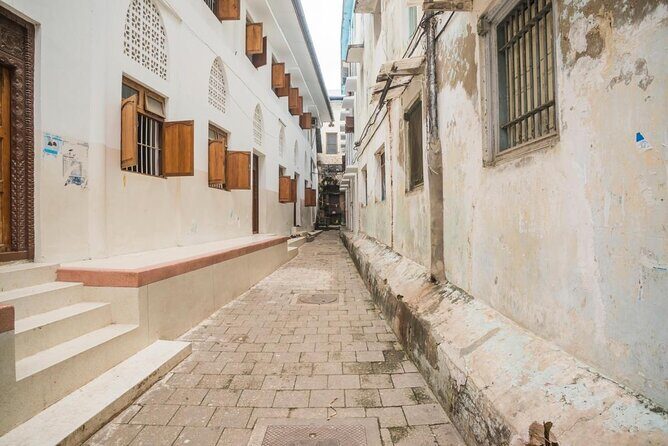
Stone Town is not the kind of place where you can just wander and automatically “get it.” The lanes twist. The buildings layer on top of each other. And the details that matter—like carved door panels and old merchant houses—sit right where your eyes will miss them if you don’t know what to look for.
That’s where Ally’s approach helps. His style is built around context: what you’re seeing, why it matters, and how the different influences in Zanzibar show up in real places. People consistently comment on how he explains things with care and how he keeps the tour comfortable at your pace. Even if your English isn’t perfect, he’s said to be understandable and patient, which matters in a place where a lot of street info gets lost fast.
One more thing I like: this tour doesn’t feel like a checklist. It’s structured enough to keep you from wandering in circles, but flexible enough that you can ask what you’re curious about—architecture, history, or daily life.
You can also read our reviews of more tours and experiences in Zanzibar.



Forodhani to the First Streets: Getting Oriented Fast

Your walk begins in Forodhani, Zanzibar, and ends back at that same meeting point. That matters because Stone Town’s layout can feel like a puzzle box—especially if you’re arriving from the ferry or a new part of the island. Starting in a central area helps you orient quickly, and returning to the same place makes the whole experience simpler afterward.
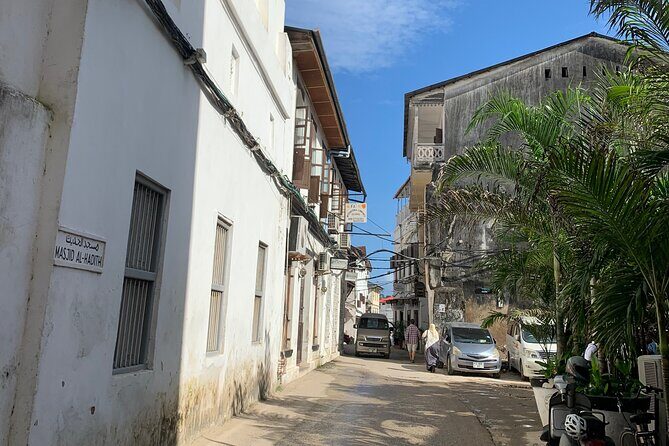
Right away, the tour leans into the part of Stone Town that makes people fall for it: the narrow lanes and alleyways where the city feels lived-in, not staged. You’ll spend time wandering the maze-like streets at a pace that’s meant to let you look up as well as around.
If you want a practical goal for day one, this is it: walk the streets with a guide, learn what to notice, then use that knowledge for the rest of your time in Zanzibar.
UNESCO Stone Town and the “Look Up” Detail Most People Miss
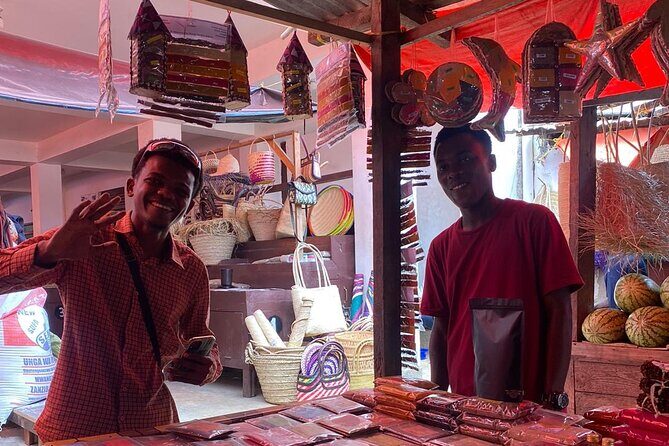
Stone Town’s beauty isn’t just in the big landmarks. It’s in the small, repeated details that reflect influences from Africa, Arab, Indian, and European cultures. The carved wooden doorways are the classic example—ornate, symbolic, and distinctive—yet they’re also exactly what a distracted visitor walks past.
This tour keeps you focused on those visual cues. You’ll get time to slow down, look at doorways, notice how buildings are shaped, and understand how the city’s history shows up in everyday street scenes. That makes the rest of your day easier because you’ll recognize patterns instead of feeling lost.
I also like that you’re given permission to get a little “in the moment.” You can wander and still feel guided. The result is that Stone Town starts to feel less random and more readable.
Old Fort: Portuguese Roots and Omani Use Over Time
A major early highlight is a stop at the Old Fort. The fort’s story captures the layered history of Stone Town: it was built in the 17th century by the Portuguese, and later it was used by Omani Arabs. That sequence is exactly the kind of thing that helps you understand why the island’s culture looks the way it does.
What I think is valuable here is not only the name-drop, but the connection between power, trade, and architecture. Forts weren’t built for decoration. They were part of control and movement—things that directly connect to Zanzibar’s identity as a trading hub.
If you like history that’s anchored in real structures, this is a strong anchor point in the tour.
Darajani Bazaar Shopping Without the Tourist Headache
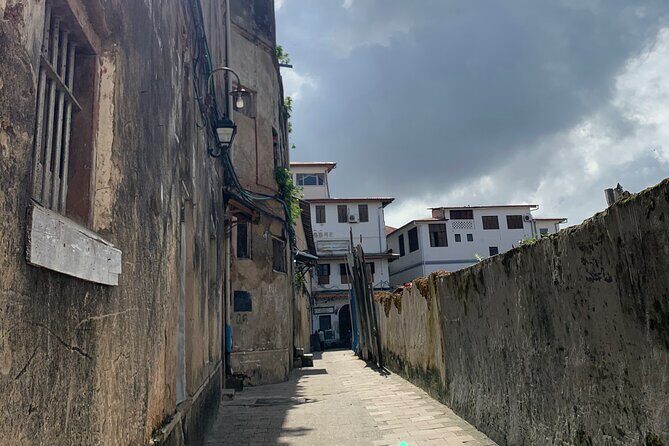
No Stone Town introduction feels complete without time at Darajani Bazaar. This is where you can browse the bustle and pick up local items—especially souvenirs and spices.
Shopping here can be intimidating if you don’t know what you’re looking at. With a guide, you get context, and that makes browsing easier. You’re also less likely to feel rushed or unsure of what’s worth your time.
A practical note: bazaars involve lots of movement and sensory overload. If you’re sensitive to crowds or want a quieter experience, you can still enjoy it, but go in with a “slow and steady” mindset, and lean on your guide to help steer you through.



The Old Slave Market Stop: Knowing What You’re Seeing
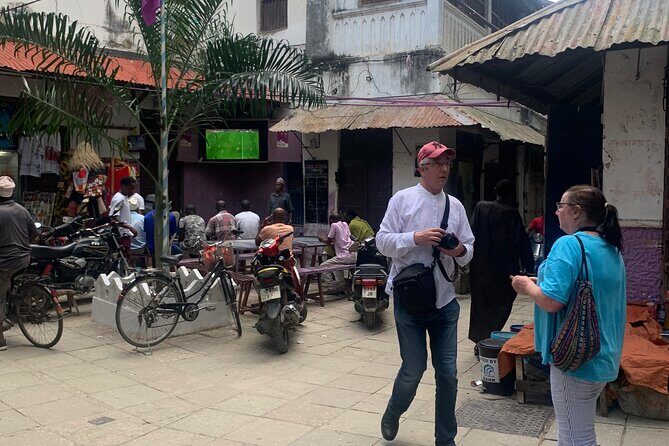
The Old Slave Market is one of the most important stops in Stone Town, and it’s also the one that requires the right tone. In this tour, the goal is understanding, not spectacle.
You’ll learn about the history tied to this site as part of the broader story of the island. It’s an emotionally heavy topic, so it helps that the tour is private and paced. You can take breaks and move at a comfort level that fits you.
Also, plan for possible extra cost: entrance at the Old Slave Market isn’t included. Having a little budget reserved makes the stop smoother when you reach it.
Sultan’s Palace, House of Wonders, and Stone Town’s Big-Name Landmarks
The walk doesn’t just stay on side lanes. It also covers the big, famous landmarks that help you understand Stone Town at a glance.
From what’s described, the tour typically includes major sights such as the Sultan’s Palace and the House of Wonders, along with the kind of mansions and architectural styles that made Stone Town famous. You’ll also get guidance toward the details that connect these sites to the broader cultural mix of the island.
This is one of the reasons the tour works well as an orientation. You leave with names you can connect to the street maze you walked through. Later, when you revisit areas on your own, you’ll have a mental map that matches what you see.
“Swahili House” Rooftop Viewing: When Extra Fees Are Worth It

One optional-feeling element is the Swahili House stop for a rooftop view of Old Town. The cost for that rooftop entrance is not included, so you’d decide based on your budget and your interest in getting a higher perspective.
I find rooftop views helpful in Stone Town because it’s easier to understand the layout from above. Even a short view can turn your mental picture from confusing to coherent.
If you skip it, you won’t lose the tour’s main value. But if you enjoy viewpoints and photo angles that show how the maze connects, it’s a sensible extra—assuming you’re comfortable paying the separate entry fee.
How the Tour Stays Comfortable: Pace, Weather, and Questions

A lot of walking tours fail the basics: pace is too fast, people get steamrolled, and questions get brushed off. This one is designed to feel different.
Guides described in the experience style are said to stop when needed, keep things moving at a good pace, and answer questions directly. One practical example you should appreciate: weather can happen, and guides have been described as accommodating in rainy conditions with simple help like umbrellas.
Also, the tour is private. That means you’re not squeezed into a crowd. You can ask for more explanation about architecture, about markets, or about historical context without feeling like you’re slowing down dozens of strangers.
Moderate physical fitness is all that’s requested. This isn’t an extreme hike, but you should expect real walking on uneven old-street surfaces.
Value Math: Is $20 for 2–3 Hours Actually Fair?
At $20 per person, this tour is priced for what you’re getting: a local guide, focused history explanations, and passage to major sights without you having to plan the whole route yourself.
The math improves if you’re thinking of a self-guided approach. Stone Town is one of those places where a map doesn’t automatically teach you what to notice. Paying for a guide saves you time and frustration, and it usually results in a deeper experience—especially around carved door details, landmark context, and the meaning of the Old Slave Market stop.
Extra costs are real though. Entrance fees for the Old Slave Market and the Swahili House rooftop are not included, and you’ll also want to budget for tips if you feel the guide earned them. Food and drink aren’t included either.
Still, for a short, high-impact introduction to Old Town, it’s strong value—especially if you care about history beyond surface photos.
Who This Tour Is Best For (and When It Might Not Fit)
This is a great fit if you want:
- an orientation walk that covers Stone Town’s main landmarks
- time to notice carved doors and street architecture
- guidance that explains the cultural layers and the darker history respectfully
- a private setting where you can ask questions and go at your pace
It might be less ideal if you’re seeking a purely casual stroll with zero historical focus. The tour is built around stories and sites, so you’ll likely want to engage mentally, not just look around.
Also consider timing. Stone Town streets can get busy and weather can shift. If you schedule the tour during a hot or rainy window, it may feel more intense physically—but having a guide who adjusts pace helps a lot.
Should You Book This Stone Town Time-Travel Walk?
If you’re spending even a short time in Zanzibar and you want Stone Town to make sense fast, I’d book it. The combination of a private guide, a structured sweep of major sights, and time to notice architectural details is exactly what turns a confusing maze into a meaningful walk.
I’d make your decision based on two checks:
- Do you want history explained, including the Old Slave Market stop, not just photo ops? If yes, this works.
- Are you okay paying small separate entrance fees for specific sites? If yes, the overall value stays strong.
If you’re the type who loves streets with character and wants your visit to feel informed (not random), this is a smart way to start your Stone Town days.
FAQ
How long is the Stone Town Old Town tour?
It’s listed as about 2 to 3 hours.
Is the tour private?
Yes. It’s a private tour/activity, and only your group participates.
Where do we meet, and where does the tour end?
The meeting point is Forodhani, Zanzibar, Tanzania. The tour ends back at the same meeting point.
Is pickup included?
Pickup is offered, but pickup to other parts from Stone Town isn’t included unless you message in advance.
What’s included in the price?
Included items are a local tour guide, Zanzibar history, and passing to major historical sites. A mobile ticket is used.
Are there entrance fees during the tour?
Yes. Entrance fee for the Old Slave Market is not included, and admission fee for the Swahili House (Rooftop Old Town View) is not included.
Is there free cancellation?
Yes. You can cancel up to 24 hours in advance for a full refund. Within 24 hours, there’s no refund.