REVIEW · ZANZIBAR
ZANZIBAR: Jozani Forest, butterfly center & Reptile park
Book on GetYourGuide →Operated by MOA ZANZIBAR TOURS · Bookable on GetYourGuide
Monkeys, butterflies, reptiles, all in one day. This is a smart eco-route on Zanzibar where Jozani Chwaka Bay National Park brings you face-to-face with endangered Red Colobus, then you move to a Butterfly Center built around conservation, and finish with UWEMAJO reptiles for close-up learning. It’s the kind of day that feels varied, but still focused on the island’s natural side.
Two things I especially like. First, the Jozani forest time is guided and walk-based, so you’re not just looking at trees—you’re actually searching for animal behavior, from monkeys to the forest canopy. Second, the reptile stop is more educational than scary, and the turtle/rescue area is a standout for anyone who wants great photo chances.
One possible drawback: you’ll do a fair amount of walking, and the schedule packs three sites into a 6–7 hour window. If you hate early starts or you want a slow, lounging day, plan accordingly.
In This Review
- Key highlights worth centering
- How the Jozani–Butterflies–Reptiles route fits your day (6–7 hours)
- Jozani Chwaka Bay National Park: Red Colobus, mahogany trees, and mangrove boardwalks
- Zanzibar Butterfly Center: a living classroom on the butterfly life cycle
- UWEMAJO Reptile Park: chameleons, tortoises, and turtles you can learn from
- Price and value: what $90 really covers
- Photo and timing tips for monkeys, butterflies, and reptiles
- Who should book this eco-day, and who might not love it
- Should you book this tour?
- FAQ
- How long is the tour?
- How much does this tour cost?
- Where do I meet the tour?
- Is pickup available?
- Is this a private group?
- What languages are the live guides available in?
- What’s included in the price?
- What should I bring?
- Is free cancellation available?
- What about early starts?
Key highlights worth centering
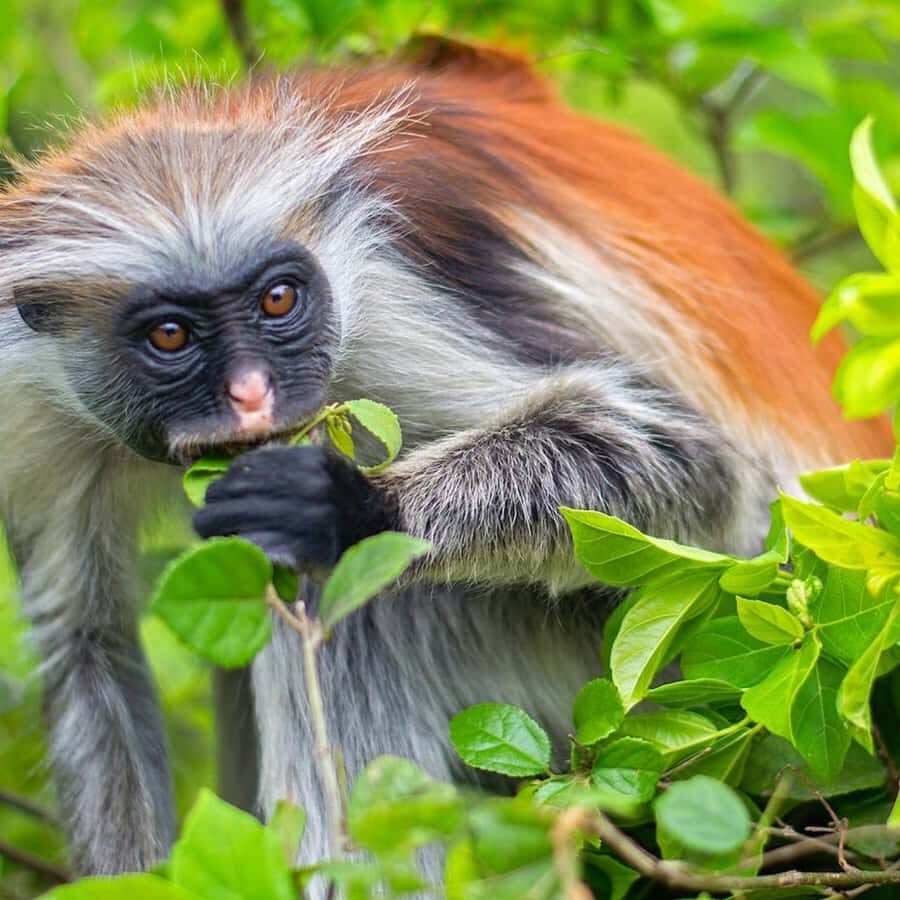
- Red Colobus in Jozani Forest: the endangered monkeys are the main event, with expert-led wildlife viewing.
- Mangrove boardwalks and wooden trails: a protected mangrove ecosystem walk that breaks up the forest time.
- Butterfly Center conservation education: you’ll learn the butterfly life cycle and how communities support eco-friendly projects.
- UWEMAJO reptiles you can see up close: chameleons, tortoises, snakes, monitor lizards, plus turtles and fish-farming-related exhibits.
- Private group, multilingual guide: you can choose a guide working in English, German, French, Italian, or Swahili.
- Entrance fees included: park entry, Butterfly Center entry, and the Reptile Park entry are part of the package.
How the Jozani–Butterflies–Reptiles route fits your day (6–7 hours)
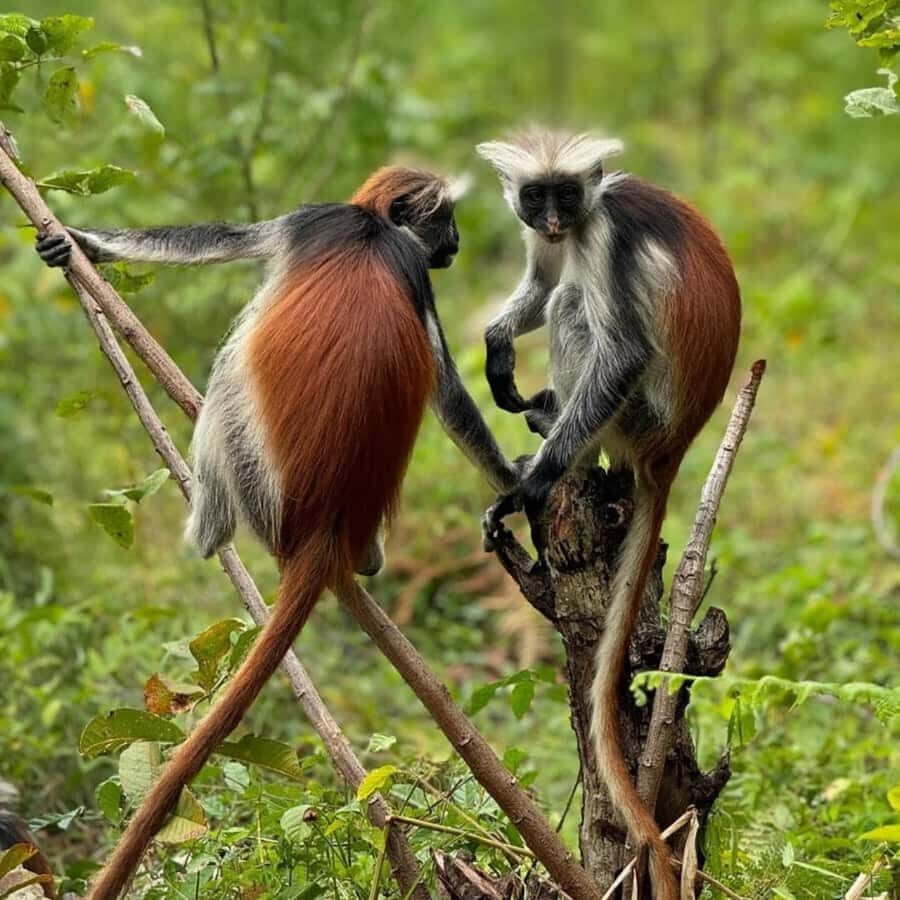
This is built as a smooth, one-day circuit: you meet at the Jozani Forest entrance gate, then get van time between stops. The total duration is listed as 6–7 hours, and that matters because you get a full dose of nature without committing to a long, exhausting itinerary.
Because it’s private, your pace can feel less rushed than a big-group scramble. You’ll also have a professional guide with you the whole way, and that’s a big deal in Jozani—spotting wildlife there is partly timing and partly knowing where to look. On a private outing, a driver like Rafi and a guide like Mohamed are part of what can make everything feel organized and calm, rather than chaotic.
Expect a day that starts early (it’s recommended), plus a mix of guided walking and short photo breaks. If you’re the type who likes to ask questions while everyone else is just staring, you’ll get a lot out of the format.
You can also read our reviews of more tours and experiences in Zanzibar.



Jozani Chwaka Bay National Park: Red Colobus, mahogany trees, and mangrove boardwalks
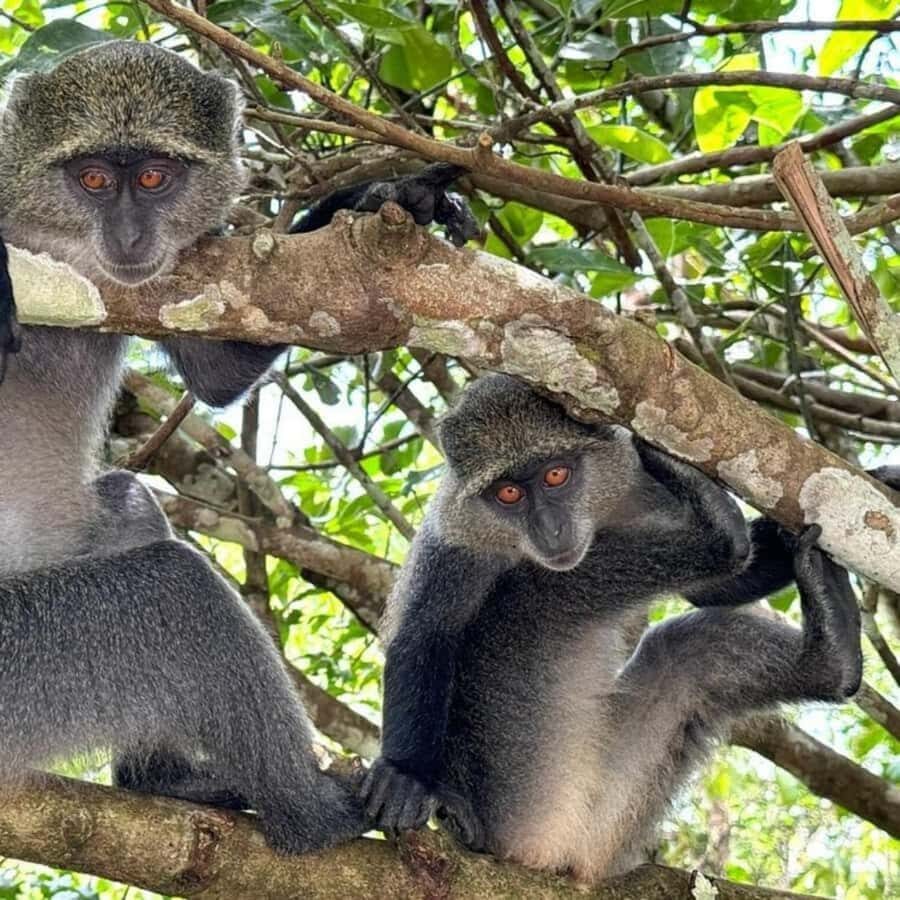
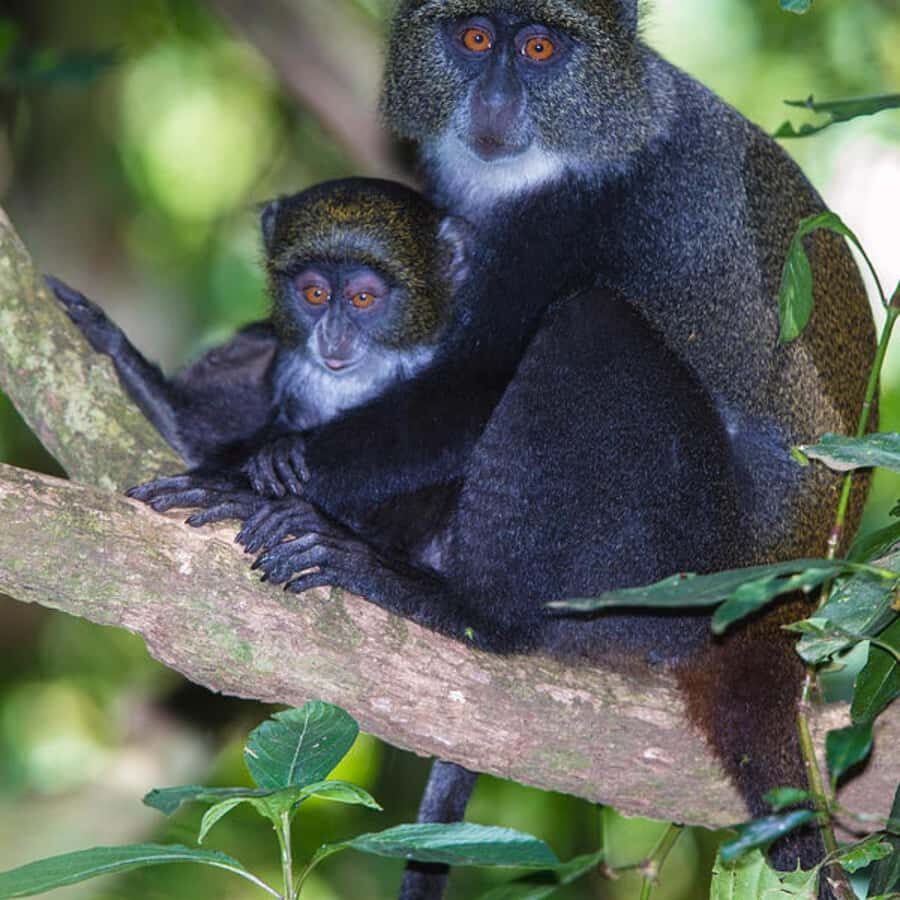
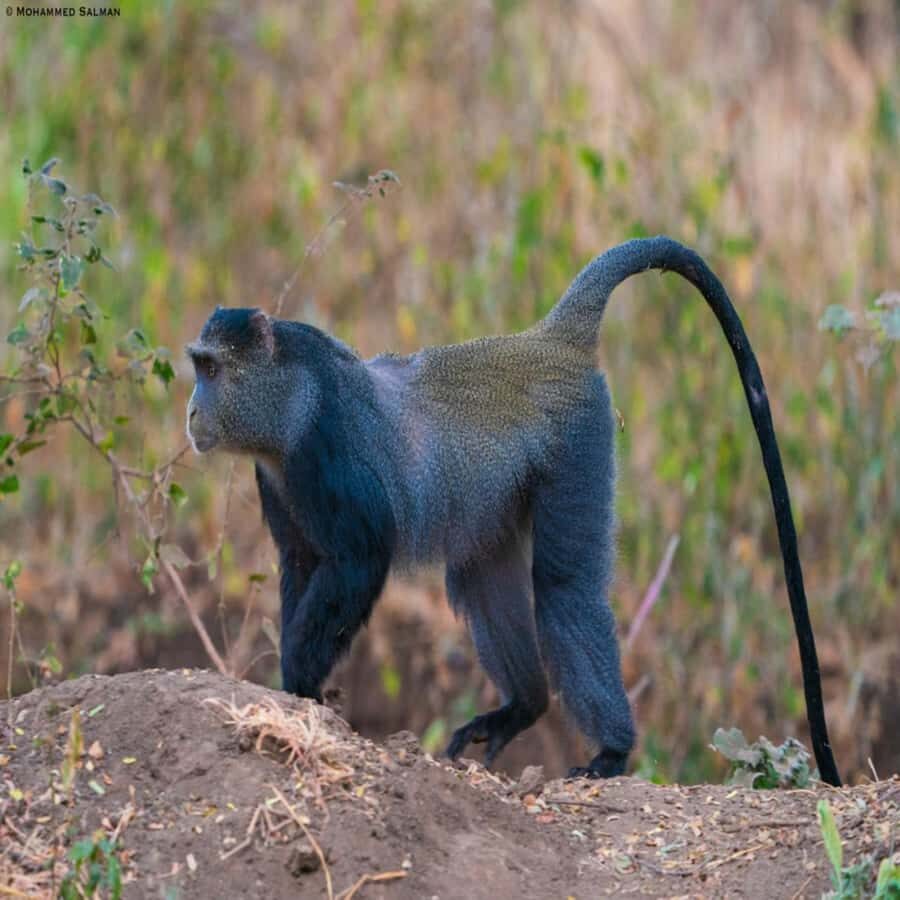
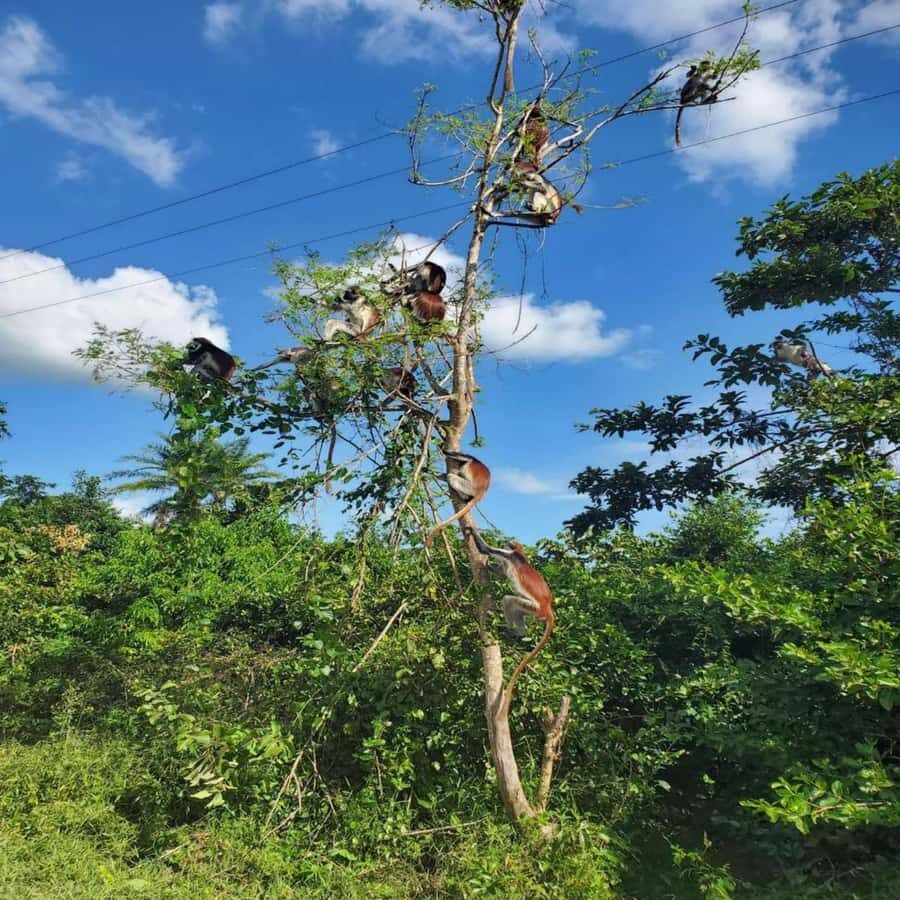
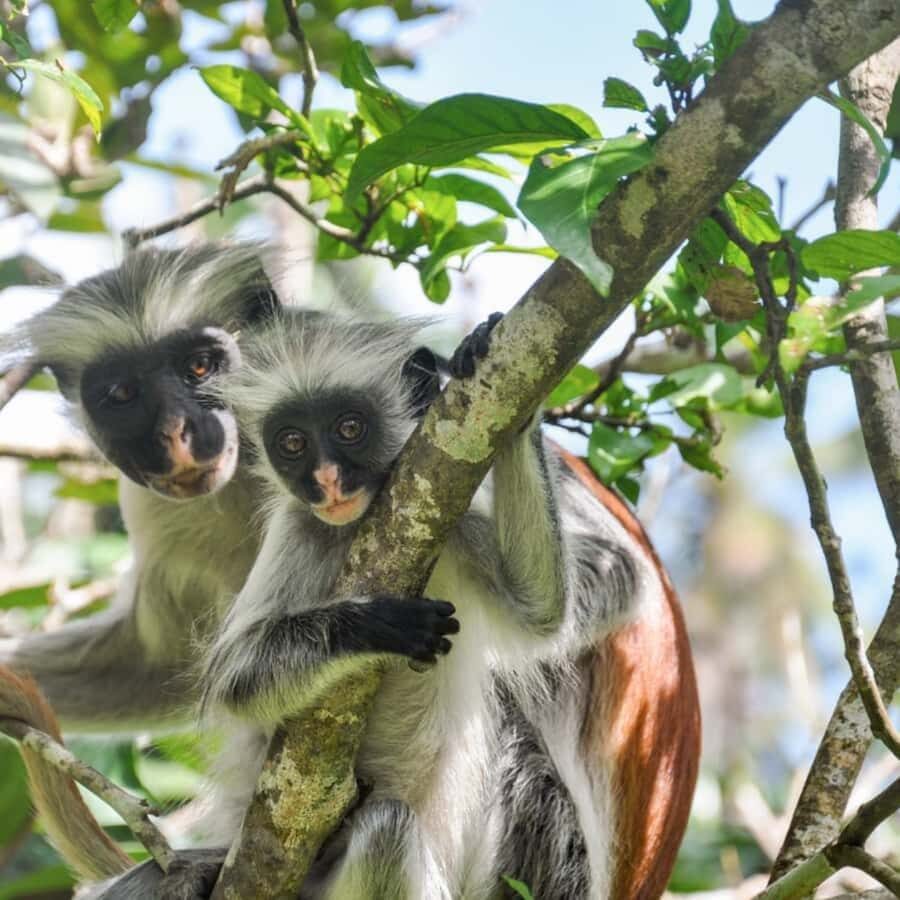
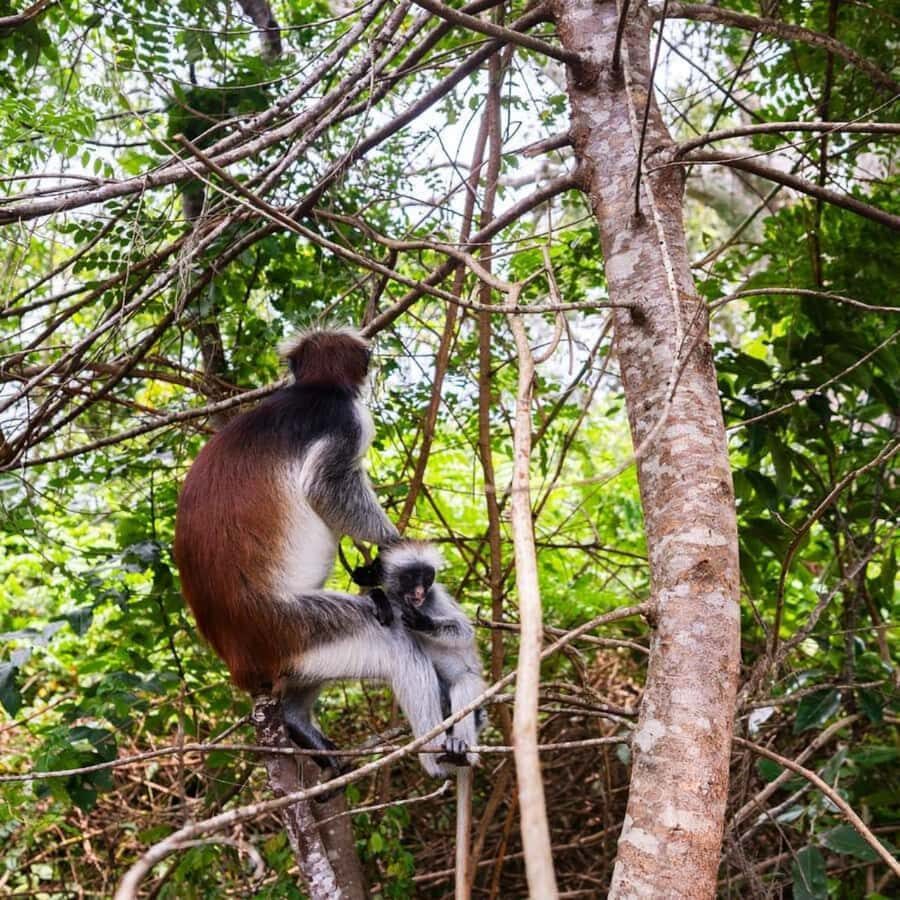
Jozani Chwaka Bay National Park is the reason this tour works. You’re there for the rare Red Colobus monkeys, which are the headline species—and you’re not left to hunt for them alone. With a guide, the time becomes more about animal behavior than random spotting.
The park section is listed as about 2 hours, and it includes a photo stop, a guided tour, a walk, wildlife viewing, and even a traditional dance show. That mix can be surprisingly useful. The dance show isn’t a throwaway item; it gives context and keeps the day from feeling like only “walk, look, move on.” Then you’re back outside, scanning treetops and edges of the trail.
You’ll also see the forest’s older feel, including ancient mahogany trees, and you’ll walk wooden walkways through a protected mangrove ecosystem. This is one of the smartest parts of the day because it changes the scenery and the sensory experience. Forest canopy is one mood; mangroves are another—less dry, more alive with small details.
What to keep in mind:
- Bring comfortable shoes. Wooden paths can still feel uneven.
- Sun matters. Even on a forest walk, you can get exposed on stretches of trail.
- Your best wildlife viewing often comes when you stop moving for a minute. Don’t panic if the monkeys don’t appear instantly—this place rewards patience.
Zanzibar Butterfly Center: a living classroom on the butterfly life cycle
After Jozani, you head to the Zanzibar Butterfly Center for about 1 hour. This stop is designed around something simple: you’ll walk through a tropical garden enclosure where hundreds of butterflies flutter freely. The point isn’t just pretty photos (though you’ll get those). It’s learning, with a guide-led experience.
You’ll cover the butterfly life cycle and how conservation works in practice. The center’s focus includes sustainable conservation and how local communities are involved in eco-friendly projects that support both nature and livelihoods. That last part is worth your attention: it’s not “protect nature” as a slogan. It’s protection tied to people, money, and everyday choices.
A practical way to use your time here: slow down. Butterflies move fast, but they also pause. If you rush, you’ll miss the moments where they’re calm enough for sharper photos and easier viewing. If you’re with kids, this is often the most engaging stop because it feels safe and interactive—more hands-off than animal handling, but still lively.
Also, don’t treat the butterfly center as a quick selfie stop. Use it as a breather between Jozani forest hiking and the reptile park. Your feet will thank you.
UWEMAJO Reptile Park: chameleons, tortoises, and turtles you can learn from
The final major stop is the Uwemajo Reptile Park (listed as UWEMAJO) for around 1.5 hours. This is the section that turns curiosity into understanding, especially if reptiles are not your comfort zone.
You’ll explore a range of animals, including chameleons, snakes, tortoises, and monitor lizards. The park is described as a sanctuary for these species, and the tone is educational and safe—more about seeing them clearly and learning how they fit into Zanzibar’s wildlife than about getting shocked or spooked.
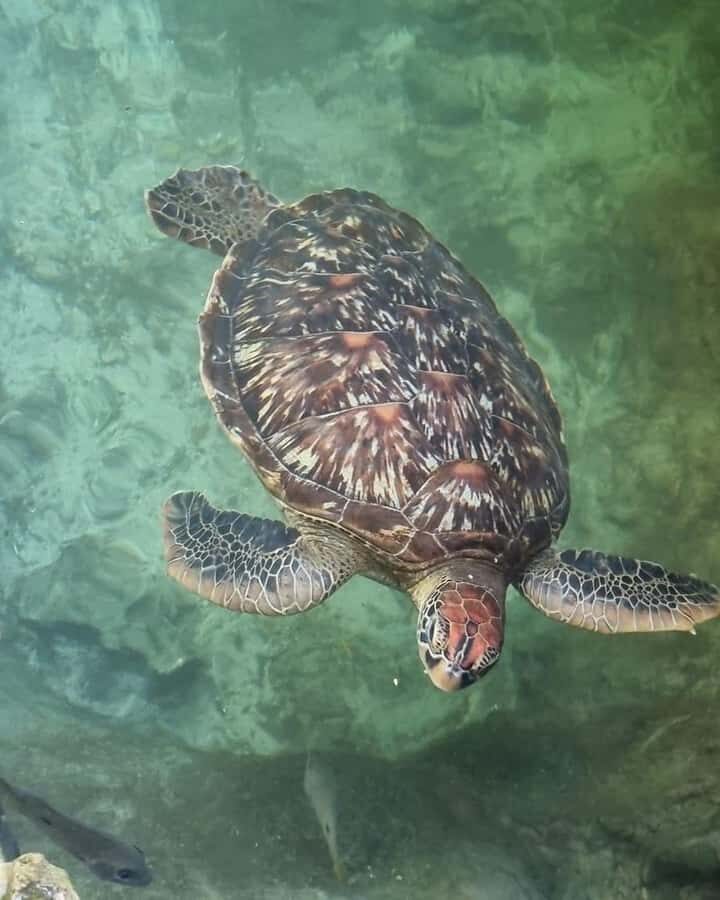
Turtles and fish-farming-related exhibits are also mentioned in the park description, and this is where one reviewer’s advice can help you. If your priority is photos of turtles, I’d treat this as the better first target than other “turtle photo” options on Zanzibar, because the setting here is set up for close, visible viewing. The key is to follow the guide’s pacing and positioning so you’re not fighting crowds or walking through your own shot.
A few practical tips so you don’t lose the best moments:
- Reptiles often look slow, but they still react. Watch what your guide is watching.
- Use slower movement around enclosures. Quick footsteps can push animals out of your sight line.
- If you see chameleons or tortoises, give them a moment. They’re not always “on display,” and patience is usually rewarded.
For families, this can be a strong end to the day because it feels like a learning stop, not just a zoo stop. For nature nerds, it’s strong because it gives you context for how local wildlife is managed and protected.
Price and value: what $90 really covers
The listed price is $90 per person for a 6–7 hour private eco-tour. On paper, that can sound like a lot—until you break down what’s included.
You get:
- A professional guide for the whole circuit
- Jozani Forest entrance fee
- Butterfly Center entrance fee
- Reptile Park entrance fee
- Van transfers between the stops (with time set aside at each location)
This is the key value point: entrance fees can add up fast when you book sites separately. Here, they’re bundled, and you’re paying for time and expertise, not just transportation. The private setup also helps you avoid the “wait around for the whole group” problem, which is when vacation hours vanish.
So if you like guided wildlife viewing and you want three conservation-focused stops without doing logistics juggling, $90 starts to look like a fair deal rather than a splurge.



Photo and timing tips for monkeys, butterflies, and reptiles
You’ll want photos, but the best shots come from matching the environment. Here’s how I’d approach each stop.
In Jozani
Expect the Red Colobus to be high and active. The temptation is to aim low and chase motion. Instead, pause. Let the guide choose where to stand, then take photos only when the monkeys move into your line of sight. If you’re shooting video, keep the camera steady during longer pauses—wildlife moments are brief.
At the Butterfly Center
Wear bright colors if you’re comfortable (it can help butterflies stand out), but don’t wear anything that makes you overheat. Stay patient and let the butterflies come to the “quiet spots” where they slow down. You’ll get better photos by waiting than by constantly repositioning.
At UWEMAJO
Reptiles can be very still, then suddenly change position. Take fewer photos but with more attention to angle. Turtle photos are often about height and clear sightlines—again, follow your guide’s lead and don’t block other people’s views.
Also, bring sunscreen and keep a basic cash buffer. The tour instructions specifically call out sunscreen and cash, which usually means you’ll want it on hand for small extras outside the covered entrances.
Who should book this eco-day, and who might not love it
I think this tour is a strong fit for:
- Wildlife lovers who want both forest animals and a butterfly learning stop
- Families who want a fun day that ends with education and close reptile viewing
- First-time visitors who want a nature day that’s not only beaches or only one single park
- People who appreciate conservation when it’s tied to real-world community support
You might want to choose a different plan if:
- You want a very relaxed day with minimal walking
- You dislike animal-focused days (even educational ones)
- You prefer long stays at one place rather than three shorter, guided sections
In general, the format works because it balances wildlife viewing with structured education and ends with animals that many people misunderstand. If that sounds like your style, you’ll likely enjoy the flow.
Should you book this tour?
Yes, I’d book it if you want one solid nature-and-wildlife day in Zanzibar that covers Jozani Forest, a conservation-focused butterfly experience, and a reptile sanctuary visit without you having to piece everything together yourself. It’s also a nice choice for a private group because the timing and guide attention matter in Jozani.
If you’re unsure, decide based on your priorities. If Red Colobus and educational conservation stops are high on your list, this is a good match. If you’d rather spend all day in a single setting, you may find the pacing a little tight.
FAQ

How long is the tour?
The duration is listed as 6–7 hours.
How much does this tour cost?
The price is listed as $90 per person.
Where do I meet the tour?
Meet at the Jozani Forest entrance gate.
Is pickup available?
Pickup is optional. You can meet at the hotel lobby/reception, and your guide will be waiting.
Is this a private group?
Yes. The tour is described as a private group.
What languages are the live guides available in?
The tour offers live guiding in English, German, French, Italian, and Swahili.
What’s included in the price?
Included are a professional tour guide, Jozani Forest entrance fee, Butterfly Center entrance fee, and Uwemajo Reptile Park entrance fee.
What should I bring?
Bring comfortable shoes, sunscreen, comfortable clothes, and cash.
Is free cancellation available?
Yes. You can cancel up to 24 hours in advance for a full refund.
What about early starts?
Starting early is recommended.