Zanzibar has a way of surprising you fast—try Maasai World for culture you can see up close. This short visit is built around Maasai history, everyday tools and clothing, plus an interactive bow-and-arrow moment. It’s also one of those activities where pre-booking matters, because you’re securing your spot ahead of time.
What I like most is the mix of learning and doing. You’ll tour an authentic-feeling Maasai village, meet people who explain customs, then ask questions directly instead of getting only a script. I also love that the experience is hands-on: you get to try the traditional bow and arrow, not just watch from the sidelines.
One consideration: the whole thing is about 2 hours, so it’s not a long, slow immersion. Also, you may hear perspectives and topics that feel challenging or unfamiliar if you expect everything to be softened for Western audiences.
In This Review
- Key things you’ll notice at Maasai World
- Getting to Maasai World: Mpandeni location and timing
- What a 2-hour Maasai World visit feels like (and what fits inside)
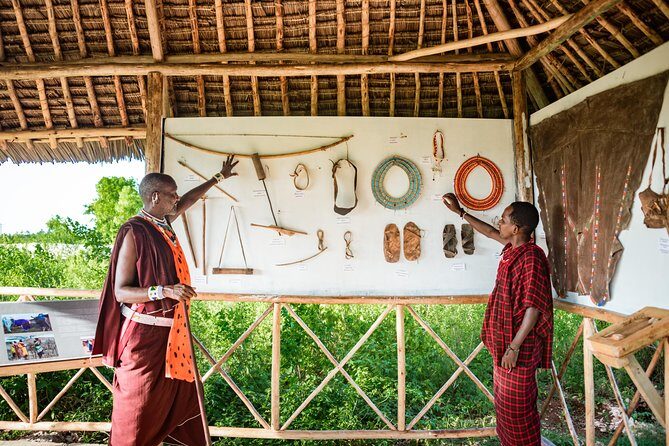
- Maasai history, tools, and cloth: the learning section that matters
- Dance and the village tour: why it’s more than a performance
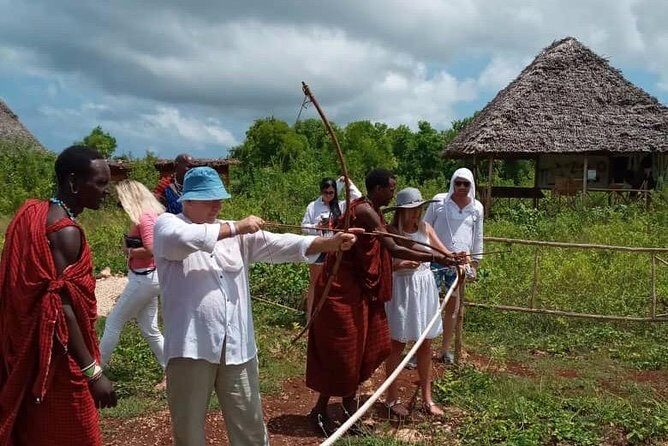
- Bow and arrow time: the hands-on activity that makes it stick
- Asking questions with Maasai people (including direct answers)
- Price and value: is $20 worth it?
- Who should book Maasai World (and who might not love it)
- A practical checklist before you go
- Should you book Maasai World?
- FAQ
- How long does the Maasai World experience last?
- Where does the experience start and end?
- What can I do during the experience?
- Is bow and arrow practice included?
- Do I need to pre-book to guarantee entry?
- How much does it cost?
- What are the opening hours?
- Can I cancel for a full refund?
Key things you’ll notice at Maasai World
- Guaranteed admission with advance online booking, so you don’t gamble on last-minute availability
- Hands-on bow and arrow activity that turns history into something you physically try
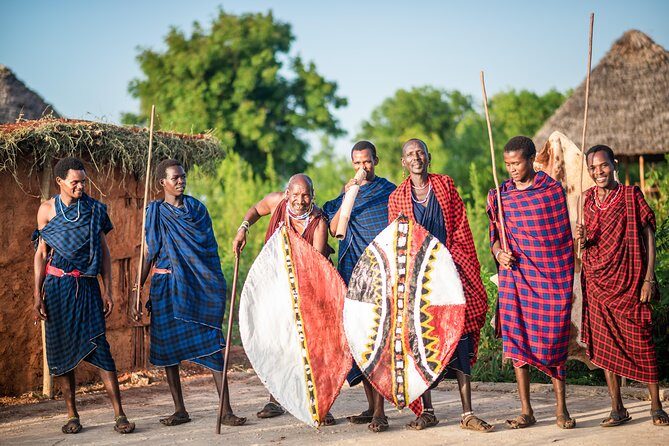
- Village tour + dance that helps you connect cultural explanation to real-life routines
- Q&A with Maasai people, so you can ask your own questions instead of guessing
- Private group format, meaning it’s only your group participating
Getting to Maasai World: Mpandeni location and timing

Maasai World is in Mpandeni, Zanzibar. Your meeting point is at Maasai World, marked as 58H2+2CP, Mpandeni, Tanzania, and the activity ends back at the same spot. That end-back-to-start setup is practical in Zanzibar, because you’re not stuck figuring out how to get “somewhere else” afterward.
Timing is also clear. The opening hours run 10:00 AM to 7:00 PM, every day (Monday through Sunday) during the listed operating window. If you’re planning around beach time or other tours, you’ve got flexibility, but you should still aim to arrive a bit early so you don’t feel rushed once you’re at the site.
If you’re the type who likes to lock things in, this one behaves well for planning. It’s often booked about a month ahead on average, so booking earlier than the last few days can help you match your preferred day and avoid surprises.
You can also read our reviews of more tours and experiences in Zanzibar.



What a 2-hour Maasai World visit feels like (and what fits inside)

This experience runs about 2 hours. In that time, you get a structured sequence: cultural explanation, a village tour, dance, and then the bow-and-arrow activity. It’s short enough to fit into a busy day on Zanzibar, but long enough to feel like you actually did something—not just a quick photo stop.
Because it’s a private tour/activity with only your group participating, the experience tends to feel more personal than a crowded attraction. That matters for the Q&A part. When you have space to ask questions, you get better answers, and you’re more likely to leave with details you can use in conversation later.
You’re also handed a mobile ticket, and you receive confirmation at booking time. That’s a small thing, but it reduces stress when you’re moving around Zanzibar and juggling multiple stops.
Maasai history, tools, and cloth: the learning section that matters

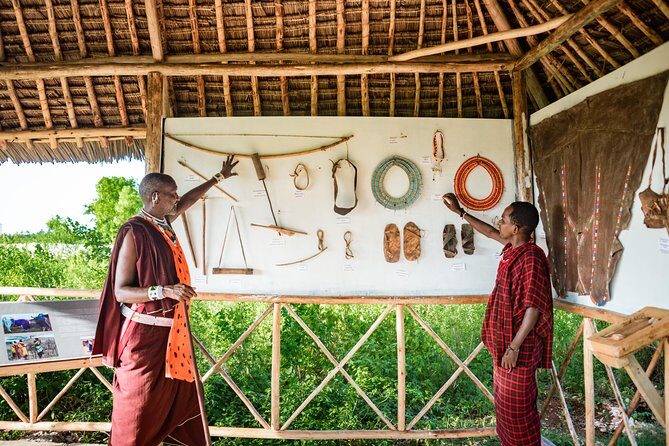
The center of the visit is “history-culture-tools-cloth.” Translation: you’ll be shown the kinds of practical items and clothing associated with Maasai life, then you’ll learn what those items mean in everyday living and tradition. This is where the experience earns its educational value.
I like the way this works because it’s not only about facts. It’s about context: tools and clothing are tied to daily routines, identity, and the way people explain their own culture. When a guide points to an item and explains why it matters, you start to understand the “why,” not just the “what.”
From the way the guide David is described, he focuses on history and how things have developed over time. That’s useful. Many cultural visits only cover one snapshot, but here you get a sense of change—how past and present connect.
Dance and the village tour: why it’s more than a performance
You’ll also get dance with the Maasai and an on-site village tour. This part can feel like entertainment at first glance, but it works better when you treat it as communication. Dance isn’t just something you watch; it’s a language that people use to share energy, rhythm, and meaning.
The village tour is where you connect the earlier explanations to a real setting. Even when the tour is guided and structured, it helps you see how daily life is discussed and demonstrated. It also gives you a better frame for the questions you’ll want to ask later.
One thing to keep in mind: cultural information isn’t always packaged for visitors who prefer comfortable answers. You may hear explanations that Western minds find difficult to digest. That doesn’t make it wrong—it just means you should come with an open attitude.
Bow and arrow time: the hands-on activity that makes it stick
Here’s the headline moment: you get to try a traditional bow and arrow. That’s the part people remember because it’s active, not passive. Even if you’ve never shot before, the activity is designed so you can participate.
What I’d suggest as your mindset: focus on instruction and pace, not performance. You don’t need to be the best shot in the group. The value is in the experience—learning how it feels, understanding what the tool is used for, and connecting it back to the cultural context you heard earlier.
Also, because the whole tour is about 2 hours, you’ll likely have limited time at the activity station. That means you should show up ready to participate fully and listen carefully when the bow-and-arrow segment starts. If you miss the brief, you’ll lose time that can’t easily be made up.



Asking questions with Maasai people (including direct answers)
One of the strongest parts of Maasai World is that you can ask questions about local customs directly. This isn’t a Q&A “maybe later” situation—it’s part of the structure, so you’re not left with a fog of unanswered curiosity.
This is where guides like David earn their keep. He’s described as knowledgeable about Maasai history and how it has developed. More importantly, he reportedly answers questions without hiding the harder parts of the conversation.
So if you’re the type who asks: How do you explain this to outsiders? What’s different now than before? What do visitors misunderstand?—you’ll probably get a better experience here than at attractions that stick only to polished storytelling.
Price and value: is $20 worth it?
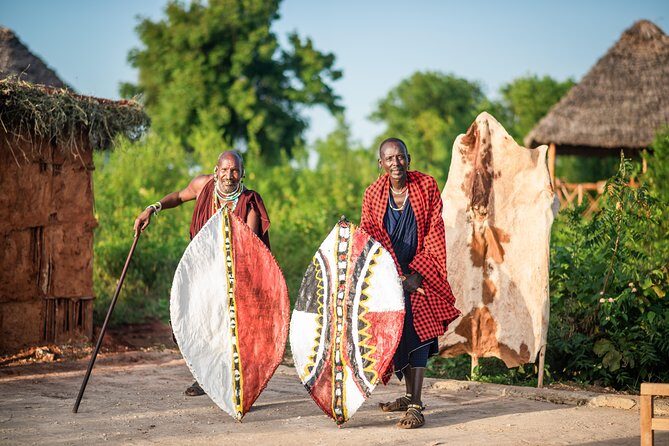
The listed price is $20.00 per person, and the experience runs around 2 hours. On its face, that sounds like a straightforward budget activity. What makes it feel like a good value is the mix of things packed into that time: guided cultural explanation, village tour, dance, Q&A, and the bow-and-arrow try-it-yourself component.
You’re not paying only for a performance or only for entry to a static display. You’re paying for interaction. And because it’s a private group experience for your group, you avoid the common downside of tours where you’re squeezed in with strangers and can’t ask your own questions.
That said, the short duration is part of the “value math.” You won’t leave with a deep, multi-day education. You’ll leave with a strong first taste: context you can build on, a memorable activity, and stories you can compare to what you see elsewhere in Zanzibar and beyond.
Who should book Maasai World (and who might not love it)
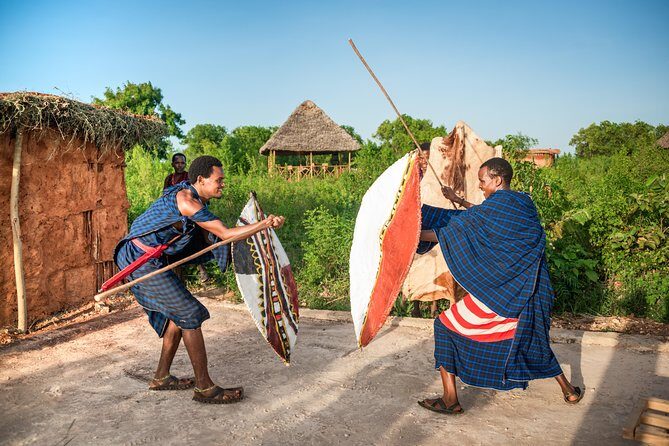
This is a great match if you want culture that’s active, conversational, and centered on real people explaining their own way of life. It’s also a good fit if you like practical participation—especially the bow-and-arrow activity.
It’s less ideal if you’re after a long, slow itinerary or if you dislike hearing explanations that might be uncomfortable or unfamiliar. Short tours are excellent for getting oriented, but they can feel abrupt if you’re hoping for hours of unhurried conversation.
It also works for many travelers. The experience notes that most travelers can participate, and service animals are allowed. It’s near public transportation too, which helps if you’re not driving.
A practical checklist before you go
Keep your expectations realistic and your questions ready. Because this is a short format, you’ll get more out of it if you decide what you want to understand before you arrive.
Here’s a quick way to prepare:
- Bring your mobile ticket (and make sure your phone is charged)
- Wear clothes you’re comfortable moving in for dance and the arrow activity
- Arrive a little early at Maasai World on Mpandeni so you start the experience relaxed
- Think of 3–5 questions you genuinely want answered about customs, tools, or daily life
- If you’re sensitive to unfamiliar cultural perspectives, go in with patience and an open mind
Should you book Maasai World?
If you want a meaningful cultural stop that doesn’t feel like a passive show, I’d say book Maasai World. For the money, the experience blends guided learning, a village-style setting, dance, direct Q&A, and the hands-on bow-and-arrow moment. It’s short, but it’s structured enough to make the time count.
Book it especially if you’re traveling on a tighter schedule in Zanzibar and want one activity that’s clearly focused. Pre-booking also helps you guarantee admission, which is exactly what you want when you’re trying to keep your day flowing.
Go in ready to ask questions, listen closely, and accept that some answers may be less comfortable than you expect. If that’s your style, Maasai World is a strong, practical choice.
FAQ
How long does the Maasai World experience last?
It’s approximately 2 hours.
Where does the experience start and end?
It starts at Maasai World in Mpandeni, Zanzibar (58H2+2CP, Mpandeni, Tanzania) and ends back at the same meeting point.
What can I do during the experience?
You’ll learn about Maasai culture through tools and clothing, visit an authentic Maasai village, dance with the Maasai, and try a traditional bow and arrow.
Is bow and arrow practice included?
Yes. Trying out the traditional bow and arrow is part of the experience.
Do I need to pre-book to guarantee entry?
Pre-booking is recommended so you can guarantee your admission.
How much does it cost?
The price is $20.00 per person.
What are the opening hours?
The listed opening hours are 10:00 AM to 7:00 PM, Monday through Sunday.
Can I cancel for a full refund?
Yes. You can cancel up to 24 hours in advance for a full refund. Canceling within 24 hours does not receive a refund.