REVIEW · SERENGETI
3 days leopard safaris
Book on Viator →Operated by Wild Root Safaris and Adventures · Bookable on Viator
Big cats, big sky, two parks in three days. This private safari from Arusha is built for maximizing daylight game drives, with Serengeti and Ngorongoro Crater packed into a tight, efficient route.
I especially like the early start and the way the schedule balances drive time with long enough periods in the right habitats. That means you spend more time watching and less time waiting.
On day 2, you focus on central Serengeti, and the plan adapts to animal movement tied to rain patterns. I like that your guide adjusts where you go based on where herds are at that time, so the day is about the real Serengeti story, not a fixed checklist.
One thing to consider: this is an active itinerary. Three days means lots of vehicle hours and a fast pace, so it is best if you enjoy being out on safari for long stretches and can handle early mornings.
In This Review
- Key highlights worth noting
- Arusha to Serengeti: the road trip that sets your rhythm
- Day 1 Serengeti: sunset game drive and Seronera camp dinner
- Day 2 central Serengeti: chasing movement, not a map pin
- Ngorongoro Crater on Day 3: the first look that changes everything
- Price and value: what $1,276.93 buys you (and what it doesn’t)
- Practical tips for better leopard chances (without guarantees)
- Should you book this 3-day leopard safari with Wild Root?
- FAQ
- What parks are included in the 3-day safari?
- Where does the safari start?
- What time does the safari start?
- How long is the safari?
- Is this safari private or shared?
- What meals are included?
- Is bottled water included?
- Are alcoholic beverages included?
- What happens if weather is poor?
- Is there free cancellation?
Key highlights worth noting
- Private transportation: only your group, with a set vehicle for the trip
- Serengeti timing: day 1 into sunset and day 2 focused on central areas
- Rain-driven animal movement: your route can change with herds moving north/south
- Ngorongoro viewpoint first: a big first look at the caldera before you go down
- Open-top viewing on day 3: you stay exposed to the view while observing animals
- Guide quality can make or break sightings: examples from recent guides include Hamisi and Hussein
Arusha to Serengeti: the road trip that sets your rhythm
The experience starts in Arusha with pickup and a morning departure around 8:00 am. That timing matters more than you might think, because wildlife viewing often gets better as the light and temperatures shift. It also helps you avoid the feeling that you are arriving after the best hours have already passed.
You will drive toward Serengeti via the Ngorongoro Conservation Area. Along the way, you’re not just passing scenery—you’re building context for what you will later see from the ground. One guide point that really sticks: you may get an explanation of the Great Rift Valley, which runs from Lebanon to Mozambique, and how that huge geological line shapes Tanzania’s national parks.
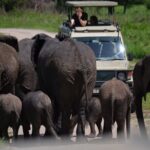
This transfer also gives you your first wildlife chances, since game viewing happens en route through conservation areas. You might see buffalo, wildebeest, giraffe, or other common Serengeti species before you even arrive. Even if leopards are quiet early, those first sightings help you calibrate: where animals feed, how predators move, and how the light behaves in this part of the country.
A quick practical point: expect bumpy roads and long sits. If you know you get stiff on long drives, plan for it. You’ll be happiest if you treat the journey as part of the safari, not as an annoying warm-up.
A few more Serengeti tours and experiences worth a look
Day 1 Serengeti: sunset game drive and Seronera camp dinner
Day 1 starts early in the morning and aims for arrival in Serengeti by early afternoon. The payoff is that you don’t waste the late day—you go right into a game drive and keep going until sunset.
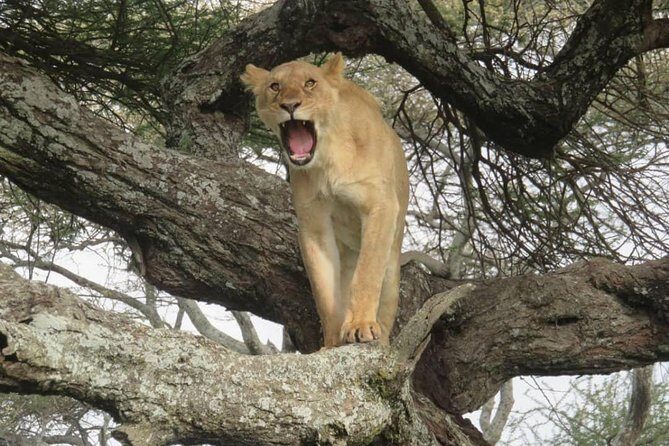
That is a smart approach for anyone chasing predators, including leopards. Lions and other big cats often get more active as the day cools, and animals shift positions in late afternoon as they move between feeding and resting areas. Your itinerary is set up to put you in the right zone at the right time, rather than only focusing on daytime spotting.
Serengeti is famous for big herds, and you get the chance to see a mix of species depending on where you are driving. You may encounter herds of buffalo and wildebeest, plus elephants and giraffes. There’s also a realistic chance of seeing antelope types like eland, impala, and Grant’s gazelle. And if luck and timing line up, the day can include the dramatic extras—lions, leopards, and other predators.
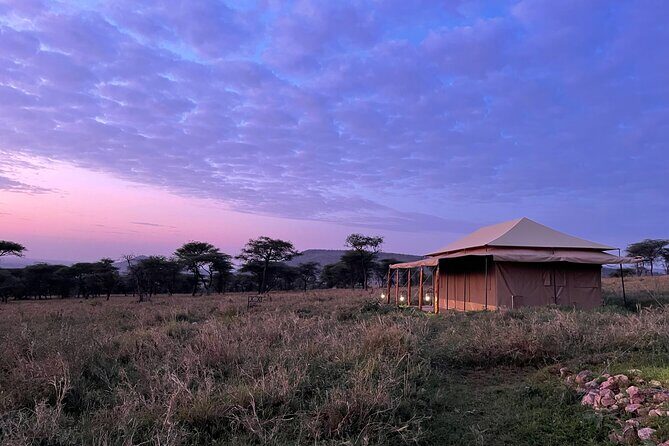
When the day ends, you will dine at the Serengeti Seronera Public Camp site. You’ll also be included for breakfast later, plus the trip includes meals across the days. This matters because safari days can drain you, and having dinner covered lets you focus on recovery and next-day energy instead of hunting for food after a long drive.
Downside of this day: it is long. Even with smooth logistics, your body will feel it. My advice is to keep your packing simple so you’re not juggling gear, and to settle in for the night early so day 2 doesn’t feel like a sprint.
Day 2 central Serengeti: chasing movement, not a map pin
Day 2 is a full day spent on game drives in central Serengeti. The big idea here is that Serengeti is not static. Herds move, predators follow patterns, and your guide uses local knowledge to place you where sightings are more likely.
The itinerary explains the seasonal movement clearly. During the short rainy season in November and December, herds tend to shift from the hills in the north toward the plains in the south. During the longer rainy season from April to June, the movement reverses and herds return back up north. Your exact path can vary year to year, because rain isn’t always identical from season to season. What doesn’t change is the principle: rain influences food and water, and food and water pull animals around.
This is why I like a flexible day over a rigid checklist. If you lock into one area without adapting, you can miss the key action. With this setup, you’re effectively following a moving system, and your guide is the translator of where the herd story is happening right now.
You also have a possible option to visit the Serengeti Visitor Centre, depending on timing. That stop can add meaning to the sightings, because it’s tied to ongoing research connected with the Frankfurter Zoological Society. If you like understanding the bigger picture—how parks are studied and how wildlife research is organized—this can be a nice pause between long drive sessions.
Food and rest are also built into the structure. You will spend the night at Serengeti Seronera Public Camp site again, and the trip includes breakfast and lunch on day 2, plus other meals across the three days. That helps keep you fueled for another day on the road.
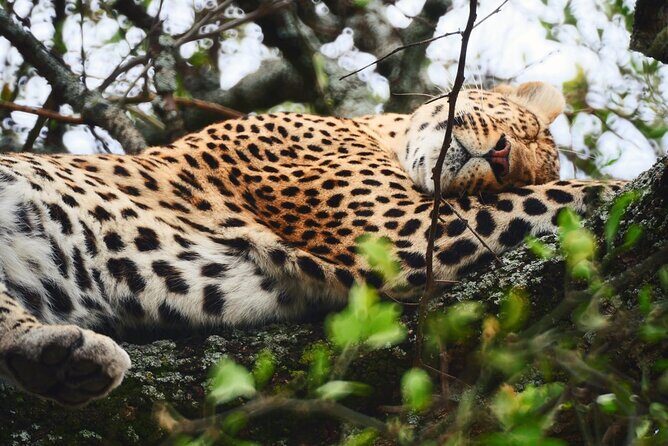
What to watch for on day 2: the rhythm of animal behavior. Predators can be patient, and leopards in particular often require quiet time and good positioning. The best outcomes tend to come when you stay steady—less rushing, more scanning—and trust your guide to take you to productive spots.
Ngorongoro Crater on Day 3: the first look that changes everything
After breakfast on day 3, you head to Ngorongoro Crater, one of the most famous viewing places in all of Tanzania. The itinerary highlights the crater as something often described as Africa’s Eden and an eighth natural wonder, but the real reason it earns that reputation is what you see when you get your first glimpse from the panoramic viewpoint.
That first reveal is basically a stage. You’re looking into a vast caldera with steep edges and a closed-world feel. It helps you understand why Ngorongoro is such a concentration point for wildlife. The site is known for hosting over 120 species of mammal, and it is considered one of the best places for spotting large animals together in a single area.
What makes this day great for your chances at different big species is the variety of habitats inside the crater. The itinerary calls out black rhinoceros sightings as a particular strength, plus hippos in large numbers around the water. If you’ve got Big Five on your wishlist, this is the day that most closely aligns with that kind of dream-list viewing, based on the crater’s reputation and the included chance to observe these iconic animals.
You will be observing from the comfort of an open-top vehicle, which is ideal for sightlines. Even when animals are far, the open view helps with spotting movement and getting clearer angles for photos. The downside is also real: you will feel the elements. If it’s cool or breezy, you’ll want layers ready.
Your day 3 plan is the payoff of the whole trip. After two days in Serengeti looking for the right conditions, you finish with a high-density setting that can deliver big visuals quickly. It’s the kind of closing day that makes your earlier road time feel worth it.
Price and value: what $1,276.93 buys you (and what it doesn’t)
At $1,276.93 per person for about three days, this is not a budget safari. But you are paying for several things that matter if you care about comfort and efficiency: private transportation, covered parking fees, bottled water, and meals throughout the trip.
Meal coverage is a real value item here. You have breakfast (3), lunch (2), and dinner (2) included. On safari, that is more important than it sounds. You avoid time spent searching for food and reduce decision fatigue during intense wildlife days. It also keeps your schedule predictable.
You also get private logistics: this is described as only your group participating. That matters for animal viewing because you can keep a more consistent rhythm and avoid getting pulled into someone else’s pace. Plus, with private transport, you are less likely to have the awkward start-stop feeling that sometimes comes with shared tours.
What’s not included: alcoholic beverages. That’s common, but it’s worth planning around if you like a drink with dinner. Another general consideration is that safari pricing typically varies with season and demand, and the itinerary notes it is dependent on good weather. If conditions are poor, you might be offered another date or a refund.
Is it worth it? For me, it looks like a strong value if you want a true wildlife-focused itinerary across two major destinations, with meals handled and a guide who can help interpret what you are seeing. If you’re the type who dislikes car time, you might question the price-to-comfort ratio, because the pace is still very much safari-driven.
Practical tips for better leopard chances (without guarantees)
Let’s be honest: leopards are not the easiest checkbox animal. They’re often in cover, they can be still for long stretches, and they don’t care about your schedule. What you can control is how you prepare for the hunt.
Here’s what helps in a safari setup like this:
- Be ready for long scanning sessions: the day can feel slow until it suddenly doesn’t.
- Dress for sun and cool: mornings can be chilly, and afternoons can be bright. Bring layers.
- Keep your camera setup simple: you’ll likely be changing your stance and angle frequently as animals move.
- Let your guide steer the route: on day 2, the plan explicitly ties movement to rainfall patterns and herd locations. Trust that logic.
A nice detail from recent guide experiences is how much interpretation you can get from the person driving. One guide, Hamisi, was described as a mine of information, and another guide, Hussein, added context on the drive and the route. That kind of information doesn’t just entertain you—it can improve your odds because it helps you understand why an area might be worth sitting in.
Also note how the itinerary balances time: sunset viewing on day 1, a central Serengeti full day on day 2, and then a crater day 3 with a viewpoint start. That structure is designed to put you where animals are most likely to be active. You’re not only chasing leopards; you’re also gathering a whole cast of species, which increases the emotional hit of every hour spent outdoors.
If your main goal is leopard, I’d still go in with the right mindset: aim for patience, not instant results. A good safari isn’t only about what appears; it’s about what you learn while you wait.
Should you book this 3-day leopard safari with Wild Root?
I’d book this if you want a focused, private leopard safari that hits both Serengeti and Ngorongoro Crater in a short window. The route is practical: early departure from Arusha, sunset game viewing on day 1, a full day that adapts to herd movement on day 2, then a crater day 3 that can deliver major sightings fast.
It’s also a good match if you enjoy learning as you go. Options like the Serengeti Visitor Centre add meaning beyond the drive, and guide-driven interpretation can turn animal spotting into understanding.
Hold off if you hate car time or you need a slow, relaxed travel pace. This itinerary keeps you on safari hours and in vehicles. You’ll enjoy it most if you treat that as part of the experience.
Overall, for the money and the time (three days, two major parks, meals included, private transport), it comes across as a solid way to experience Tanzania’s wildlife at full intensity—without stretching your holiday thin.
FAQ
What parks are included in the 3-day safari?
You’ll visit Serengeti National Park and Ngorongoro Crater (via the Ngorongoro Conservation Area).
Where does the safari start?
It starts in Arusha, Tanzania.
What time does the safari start?
The start time is 8:00 am.
How long is the safari?
The duration is 3 days (approximately).
Is this safari private or shared?
This is a private tour/activity, and only your group participates.
What meals are included?
The experience includes breakfast (3), lunch (2), and dinner (2).
Is bottled water included?
Yes, bottled water is included.
Are alcoholic beverages included?
No, alcoholic beverages are not included.
What happens if weather is poor?
This experience requires good weather. If it’s canceled due to poor weather, you’ll be offered a different date or a full refund.
Is there free cancellation?
Yes, there is free cancellation. You can cancel up to 24 hours in advance for a full refund.