REVIEW · SERENGETI
Serengeti Balloon Safari and authentic bush breakfast
Book on Viator →Operated by Serengeti Balloon Safaris · Bookable on Viator
Watching dawn break from a balloon is a special kind of magic. This Serengeti hot air balloon safari is built around that early silence: you’re taken to the launch area before sunrise, float over the plains as visibility improves, then celebrate afterward with a bubbly toast and breakfast under an acacia.
I especially love two things. First, the flight itself feels expertly handled, with professional pilots who keep you calm and informed while the route is shaped by wind. Second, the included bush breakfast under an acacia turns the morning into more than just a ride.
One thing to consider: sightings depend on weather and wind, and this requires good weather. Also, the start time is early (5:00 am), and children under age 7 aren’t allowed.
In This Review
- Key Highlights to Know Before You Go
- What Makes This Serengeti Balloon Morning Worth the Money
- 5:00 am Pickup and the Pre-Flight Routine
- Choosing Your Season: Kogatende, Ndutu, Seronera, or Grumeti
- Kogatende Airstrip (June to November)
- Ndutu Lake (Mid-December to End of March)
- Seronera (All Year Round, Central Serengeti)
- Grumeti River / Kiwarira (June to October)
- What the Flight Feels Like: Quiet, Unhurried, and Sharp
- Wildlife From Above: How to Set Your Expectations
- The Bush Breakfast Under an Acacia Tree
- Transportation and Timing: Why It’s Built This Way
- Group Size: Small Enough to Feel Personal
- Price and Value: Is $550 Reasonable?
- Who This Balloon Safari Is Best For
- A Few Practical Tips That Make the Day Easier
- Should You Book This Serengeti Balloon Safari and Bush Breakfast?
- FAQ
- What time does the balloon safari start?
- How long is the experience?
- Is pickup and return transportation included?
- What about admission to the park?
- Are children allowed?
- What happens if weather cancels the flight, or if I cancel?
Key Highlights to Know Before You Go
- Early start, big payoff: launch timing puts you over the Serengeti just as the day wakes up.
- Wind-driven route: you’ll launch from a specific area, but where you land depends on airflow.
- Authentic-feeling bush breakfast: breakfast happens out on the plains, under an acacia tree.
- Small groups: the experience caps at 16 travelers, which helps keep it calm.
- Multiple launch areas: Kogatende, Ndutu, Seronera, or Grumeti/ Kiwarira based on season.
- Pro-level experience team: you’ll get safety briefings and a very structured pre-flight routine.
What Makes This Serengeti Balloon Morning Worth the Money
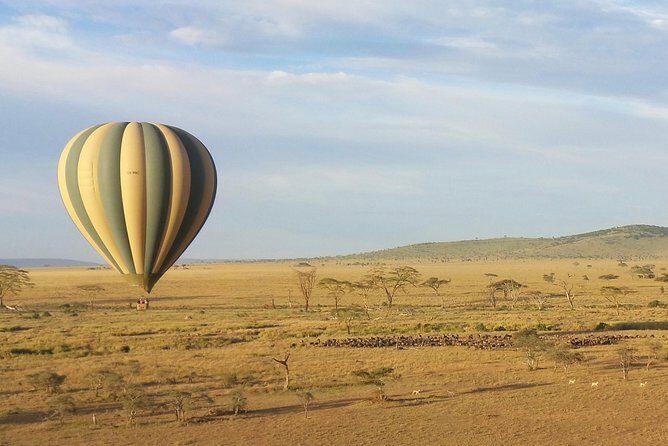
At $550 per person, this isn’t a budget activity. The value comes from two places: you’re buying a private-feeling sunrise experience with guided logistics, and you’re getting a complete package that doesn’t end at landing. You also get return camp or lodge transfers, plus a post-flight bubbly moment and an included breakfast in the bush.
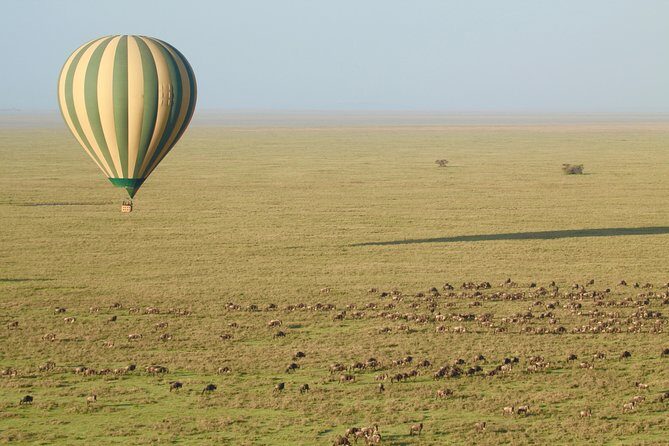
The long pole in the tent is the timing. Serengeti mornings can be spectacular, but seeing them from above is different. From the ground, you track movement. From the sky, you understand spacing: where herds cluster, where animals cross, and how the plains open up toward the horizon.
And yes, it can be bumpy getting up at 5:00 am. But that’s also why the experience stays peaceful. You’re usually not fighting crowds, and the whole operation runs like a practiced morning choreography.
A few more Serengeti tours and experiences worth a look

5:00 am Pickup and the Pre-Flight Routine
Your day starts early: the experience lists a 5:00 am start time. Pickup is offered, and you’ll be transferred to the launch site before dawn, when the team can set things up safely and steadily.
At the launch area, you’ll get the basics you need before lift-off—safety info, what to expect in the basket, and how the balloon flight works. One detail that matters on cold or dim mornings: you may find ginger tea and coffee available to warm up before you go up.
This is also where you’ll learn the key reality of ballooning in Serengeti: the wind decides your route. The team knows where you begin, but you don’t control exactly where you end up. That’s part of the adventure—and it’s why the same balloon safari can feel totally different from day to day.
Choosing Your Season: Kogatende, Ndutu, Seronera, or Grumeti
This safari uses different launch areas across the year. Your specific takeoff point depends on season, because the park’s wildlife and the wind patterns shift.
Here’s what that means for you, practically: you can’t treat ballooning like a guaranteed checklist of named animals in a fixed spot. What you can do is pick dates that match your wildlife goals, then let the wind and the route do the rest.
Kogatende Airstrip (June to November)
If you’re traveling between June and November, your flight typically starts from Kogatende Airstrip. This is a classic “Serengeti sunrise” setup, with the added bonus that your view tends to include the wide-open feel of the plains as light spreads across them.
One of the interesting parts here is the variation during the ascent. With balloons, it’s common for the basket to drift low enough at times that grass tips are right there at the edge of your view. Other times, the balloon climbs through layers of air until the horizon curves and the sky turns gold and pink with dawn.
Ndutu Lake (Mid-December to End of March)
From mid-December through March, the launch area shifts to Ndutu Lake. This is a different Serengeti feel—often greener and more focused on what the plains are doing during that season.
The same wind rule applies: your flight direction and your exact aerial path depend on airflow. But the payoff is consistent: a silent glide over open ground, with animals spread out in ways you can’t easily see from a vehicle.
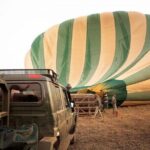
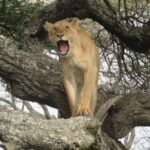
Seronera (All Year Round, Central Serengeti)
If you’re flexible or you want the most options, Seronera runs year-round in central Serengeti. This makes it a steady choice when you don’t want to lock yourself into a narrow date window.
Because it’s operating year-round, it also tends to be easier to plan around other safari activities. You’ll still get sunrise conditions and that high, calm view where you can spot movement across distance.
Grumeti River / Kiwarira (June to October)
Between June and October, flights run from Kiwarira in western Serengeti, with the experience described around the Grumeti River area. This is the setting where the post-flight celebration gets a little more “occasion” energy.
The key detail: after the flight, you may enjoy a champagne toast and then a full-english breakfast under an acacia tree. If you want a morning that feels like a proper celebration, this season-and-area pairing is a strong bet.
What the Flight Feels Like: Quiet, Unhurried, and Sharp
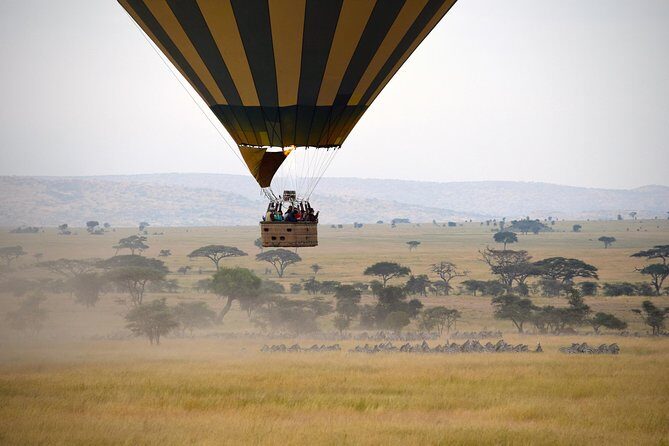
This ride isn’t about speed or bouncing along. It’s about being suspended above the plains while the day opens up beneath you.
The flight duration is listed as part of a roughly 5-hour overall experience. In the Grumeti/ Kiwarira description, the actual airborne time is described as approximately 1 hour, which aligns with how balloon safaris usually feel: enough time to spot movement, then enough time to enjoy the horizon before landing.
From your seat in the basket, you’ll likely notice three things:
- The silence: it’s genuinely peaceful, even when you’re surprised at how close the grass can feel during low drifts.
- The view expands in steps: as dawn brightens, you start seeing more detail—paths, spacing, and animal silhouettes.
- The flight changes: wind can alter your direction, so you don’t get “one perfect view” only. You get several different angles.
Wildlife From Above: How to Set Your Expectations
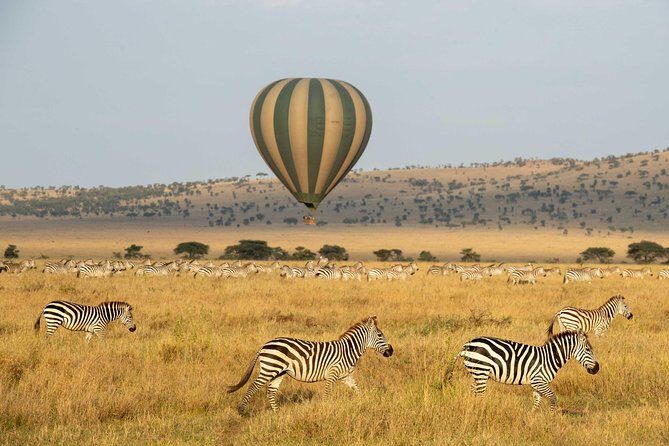
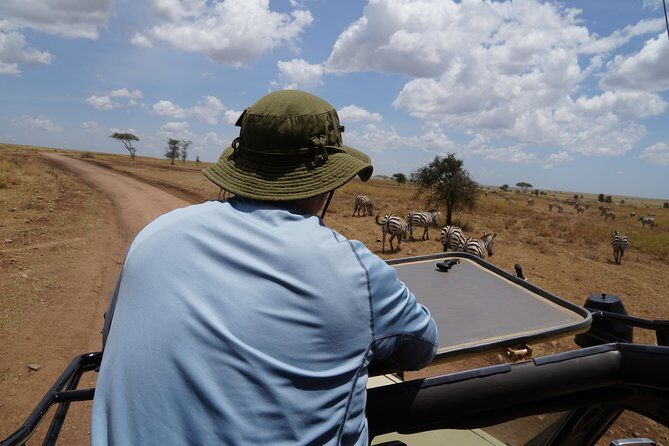
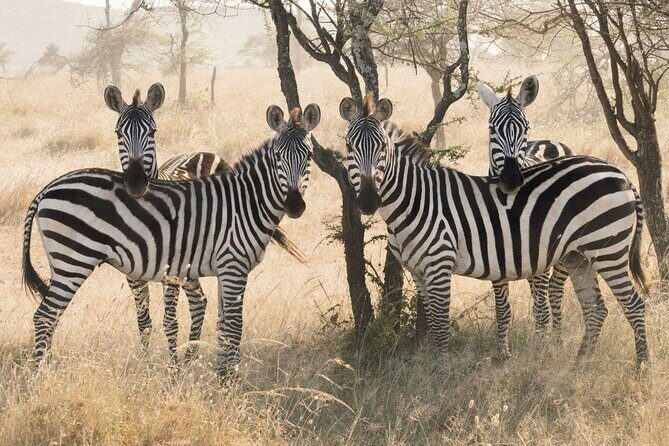
The safari highlights mention the kinds of animals you should look for: elephants, zebra, hippo, and more as the sun rises. That is the right mindset. But aerial wildlife viewing comes with a tradeoff.
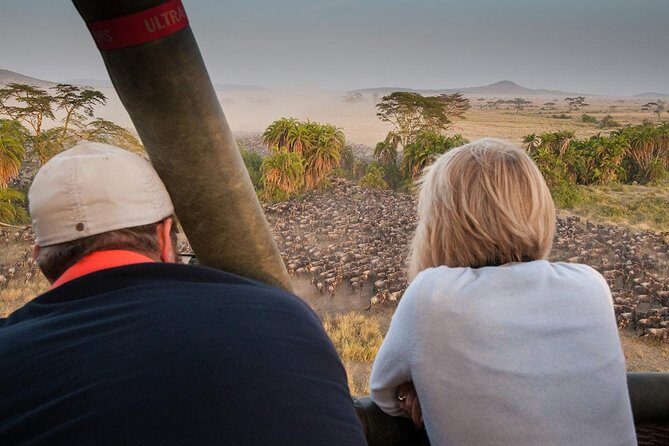
From the air, you can spot animals that are hard to approach on the ground, especially when herds are moving across open ground. However, you’re also dependent on distance, wind direction, and where your balloon path takes you. Even if the park is full of life, your specific route may or may not cross the densest activity at exactly the right moment.
A tip that helps: don’t fixate on one animal. Watch for patterns. If you see tracks or clusters, scan slowly for shapes that shift as animals move. From above, movement is often the giveaway before you identify what it is.
Also, if you’re visiting during the Great Migration window, know that timing isn’t always neat. Even in “migration months,” balloon routes can be elusive. What you’re really paying for is the aerial perspective and the chance to spot wildlife from a rare angle.
The Bush Breakfast Under an Acacia Tree

This is where the experience stops being just an activity and starts feeling like a full morning story.
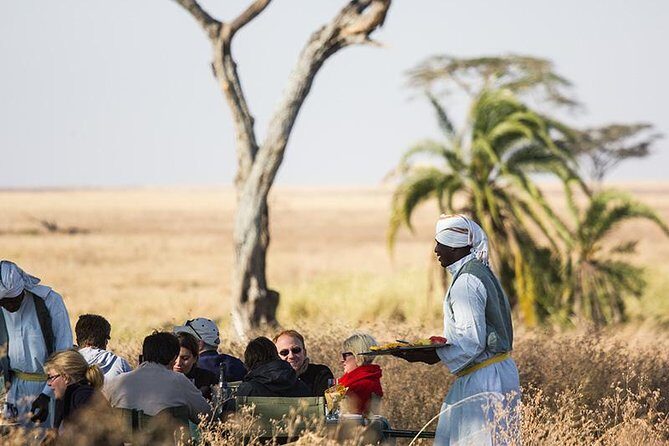
Your booking includes breakfast in the bush, served under an acacia tree. Depending on the launch area and season, it’s described as a scrumptious breakfast, and in the Grumeti/ Kiwarira description it’s called a full-english style breakfast. Either way, it’s not an afterthought. It’s part of what makes the morning memorable.
You’ll also get bubbly after the flight. In the Grumeti/ Kiwarira description, a champagne toast is specifically mentioned. That matters because it frames the landing moment as a celebration, not a hurried “get back in the car” event.
One more practical note: early starts can make you hungry, and breakfast here is timing-perfect. You’re coming down from altitude, the light is warm, and you’re able to relax without chasing the rest of your day at once.
Transportation and Timing: Why It’s Built This Way
The flight is the headline, but the structure is what keeps it smooth.
You’ll be picked up and transported to the launch site before dawn. After the ballooning and breakfast, you’ll have return transfers to your camp or lodge. That whole loop matters because Serengeti distances aren’t small, and you don’t want to spend your morning guessing routes.
Also, the overall duration is listed as around 5 hours. That means you can often fit this into a larger itinerary without losing an entire day. You just need to plan the rest of the morning for a slower pace. After ballooning, you’ll want a little downtime.
Group Size: Small Enough to Feel Personal
The group cap is 16 travelers. In practice, that’s a big deal. You get enough people for the day to feel lively, but not so many that safety briefings, timing, and photo stops turn into a bottleneck.
Small group size also helps your captain and team manage the balloon setup without chaos. Ballooning requires calm. You can feel that in how the morning runs.
Price and Value: Is $550 Reasonable?
Let’s talk value like you’re deciding with a calculator, not a dream.
You’re paying for:
- a sunrise balloon flight over Serengeti
- professional handling and safety briefing
- hotel or lodge pickup and return transfers
- post-flight bubbly
- an included bush breakfast under an acacia
At $550 per person, this is in the premium category. But compared with piecing together transport, guided sunrise access, and a proper meal afterward, it’s not just “a balloon ticket.” It’s the full morning package.
One more value factor: the operation appears to run with experienced pilots and a long-running setup. Even without promising a specific captain for your dates, the overall professionalism shows up repeatedly in the way the morning is described—briefings, smooth handling, and a relaxed post-flight celebration.
If you’re already doing a multi-day Serengeti itinerary, this can become the one add-on that changes how you see the whole park.
Who This Balloon Safari Is Best For
This is best for people who want:
- a sunrise experience that’s calm and scenic
- wildlife viewing with an aerial perspective
- a morning that includes more than just the ride
It’s not ideal if you’re looking for a late start or a casual “sleep in” day. The 5:00 am timing is firm, and your evening will depend on how you arrange the rest of your trip.
Also, the age rule is clear: children under 7 years aren’t allowed. If you’re traveling with younger kids, this won’t fit your plan.
A Few Practical Tips That Make the Day Easier
These are small things, but they help:
- Wear layers. Early mornings can be cool, and you may be waiting before lift-off.
- Bring something warm for the pre-flight time. Even with coffee or ginger tea available, you’ll likely appreciate extra layers.
- Keep your camera ready. Most people focus on the sky, but you’ll also want to capture the plains as dawn sharpens details.
- Don’t over-plan the rest of the day. After ballooning, you’ll want time to process what you saw.
Should You Book This Serengeti Balloon Safari and Bush Breakfast?
If your top priority is a once-in-a-while, high-impact Serengeti experience, I think this is a smart booking. The combination of sunrise flight, wind-driven aerial variety, and that bush breakfast under an acacia tree makes the morning feel complete.
Don’t book if you hate early starts or if you’re expecting a guaranteed parade of specific animals. This is nature plus weather plus wind, and the best plan is to enjoy what you can see in the moment.
If you’re the type who loves seeing wildlife from a new angle, and you want your Serengeti time to include something genuinely different than a standard drive, then yes—this is one of those trips that tends to stick with you.
FAQ
What time does the balloon safari start?
The start time is listed as 5:00 am.
How long is the experience?
It’s approximately 5 hours.
Is pickup and return transportation included?
Pickup is offered, and return transfers to your camp or lodge are included.
What about admission to the park?
Admission ticket is not included in the experience details.
Are children allowed?
Children under age 7 are not allowed.
What happens if weather cancels the flight, or if I cancel?
This experience requires good weather. If it’s canceled due to poor weather, you’ll be offered a different date or a full refund. You can cancel for free up to 24 hours in advance for a full refund.