REVIEW · ZANZIBAR
Jambiani Village Women at work and play
Book on Viator →Operated by Jambiani Tours · Bookable on Viator
Coconut rope starts the story. This is a Jambiani village visit built around women’s work and everyday life, guided by someone who lives there, with hands-on demos like seaweed collection, rope-making, and traditional kanga clothing.
I particularly like two things: you get access to women’s homes rather than just a craft stall, and you’ll watch how beach materials turn into real products—coconut husks become rope and doormats, and other fibers get woven and sewn.
One heads-up: expect a bit of walking and a good weather requirement. If you can’t walk more than about 2 km, this may feel like too much for a 2–3 hour outing.
In This Review
- Key things to know before you go
- Women’s homes, beach work, and crafts: what this tour is really like
- Jambiani walking time: 2–3 hours that add up
- Seaweed cultivation by the beach: seeing the work behind the view
- Coconut husk rope and doormats: from beach waste to useful goods
- Palm leaf and makuti weaving, plus handmade kofia sewing
- Kanga garment lesson: learning the wrap that shapes the look
- Henna painting demo: a short cultural art moment that feels personal
- Optional lunch in a women’s house: worth it, but plan ahead
- Price and value: what $32.65 buys you (and what it doesn’t)
- Getting to Jambiani from Stone Town: don’t underestimate time
- Who should book this tour (and who should skip it)
- Should you book Jambiani Village Women at Work and Play?
- FAQ
- How long is the Jambiani village tour?
- How much does it cost?
- Is pickup from Stone Town included?
- Can I add lunch, and how far in advance do I need to plan?
- Is this tour private?
- What happens if the weather is bad?
Key things to know before you go
- Local guide from the village: you’re walking with someone who knows the place day to day
- Crafts tied to the coastline: seaweed and coconut husks show the link between beach life and making things
- Kanga clothing lesson: you’ll learn how to wear the traditional wrap garment
- Henna painting demo: a fun cultural skill you get to watch up close
- Optional lunch with notice: arrange extra-cost lunch in advance, including dietary needs
Women’s homes, beach work, and crafts: what this tour is really like
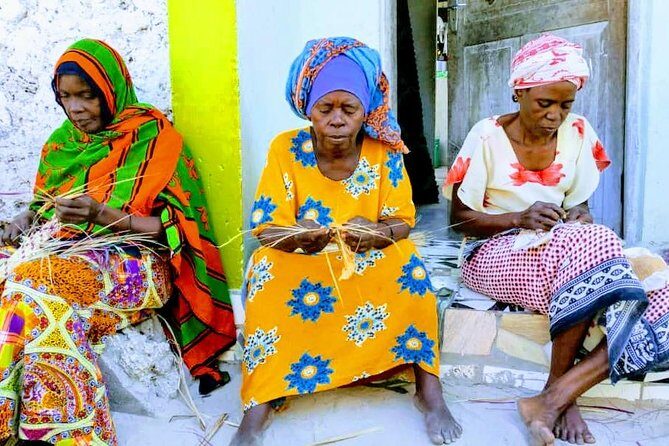
This tour isn’t about rushing through a few photo stops. It’s a slow, human-paced walk through Jambiani village life, with a guide who calls the area home. You’ll spend time with women artisans who make everyday items and traditional pieces—from fibers and rope to doormats, weaving, and handmade sewing.
The value here is access. Instead of being stuck at the edge of culture, you’re brought into the flow of how things are made and used. It also helps that the tour is private, so your guide can set the pace and answer questions without a big crowd pressure.
If you’re the type who likes learning by watching, this format works well. You’ll see how materials are collected and then turned into crafts. You’ll also get cultural context that’s hard to pick up from a beach walk alone.
You can also read our reviews of more tours and experiences in Zanzibar.



Jambiani walking time: 2–3 hours that add up

The tour runs about 2 to 3 hours. That timing matters because you want enough time to switch between village homes and beach-side work, but not so long that you’re exhausted from travel days in Zanzibar.
There’s a note that it’s not recommended if you can’t walk more than 2 km. That doesn’t mean it’s a full-on trek, but it does mean you should plan for real walking, not just standing and photographing.
Also, this experience works best in good weather. If conditions are rough, you may get a different date or a refund. So if your Zanzibar schedule is tight, don’t book it as your only plan on a flaky-weather day.
Seaweed cultivation by the beach: seeing the work behind the view
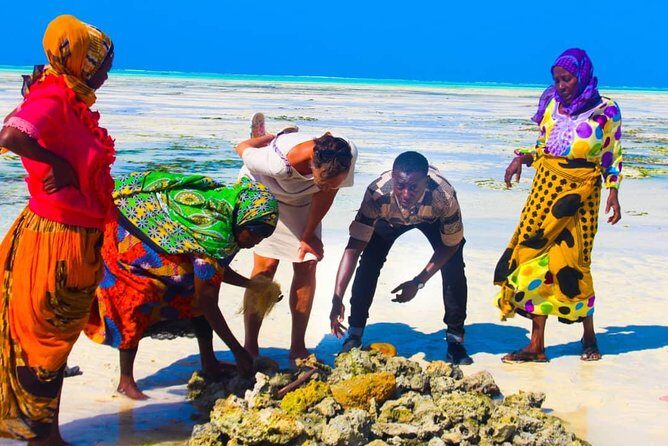
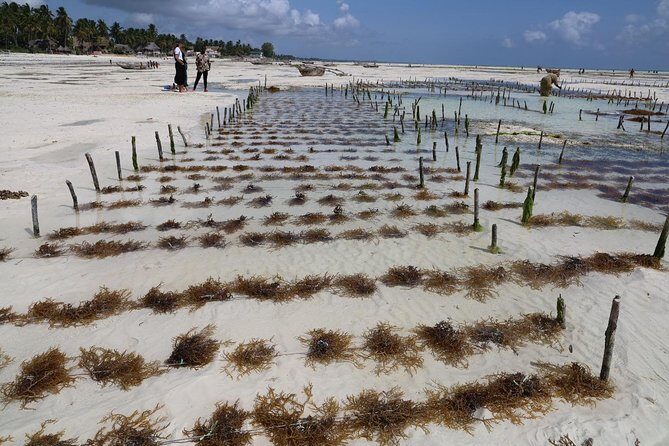
One of the standout parts is the visit to the beach area where women collect seaweed and learn about its cultivation. It’s one of those moments that flips the usual Zanzibar story. Instead of sea as scenery, you see seaweed as labor and knowledge.
This section helps you understand something important: the crafts you’ll see later aren’t random souvenirs. They’re connected to local resources and routines. Watching women work near the water also makes the day feel grounded. You’ll get an actual sense of how village life links to the coastline.
A practical tip: bring a watchful eye and slow down your camera rhythm. This is work-focused, not just sightseeing.
Coconut husk rope and doormats: from beach waste to useful goods
After the seaweed stop, the tour shifts into making-mode. You’ll watch women make coconut rope and doormats using coconut husks collected from the beach. Even if you already know that Zanzibar uses coconut fibers, seeing the process up close gives you a whole new respect level.
This part is especially good for three kinds of visitors:
- People who like making and material stories
- Anyone who wants crafts that feel connected to place
- Travelers who prefer learning from observation over a lecture
And it’s also a reminder that “souvenir” can mean “something useful.” Doormats and rope are the kind of objects that earn their value through daily function.
Palm leaf and makuti weaving, plus handmade kofia sewing
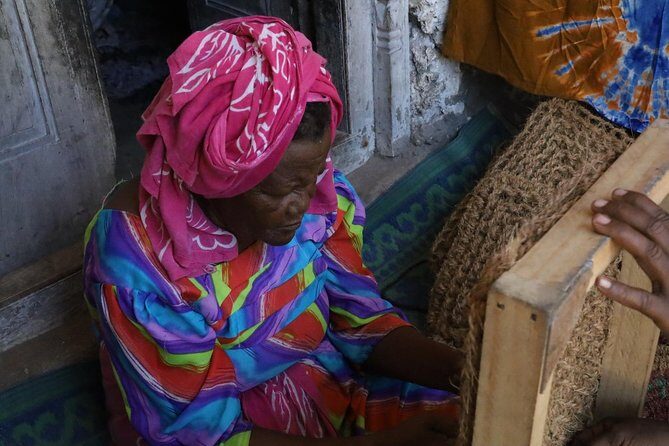
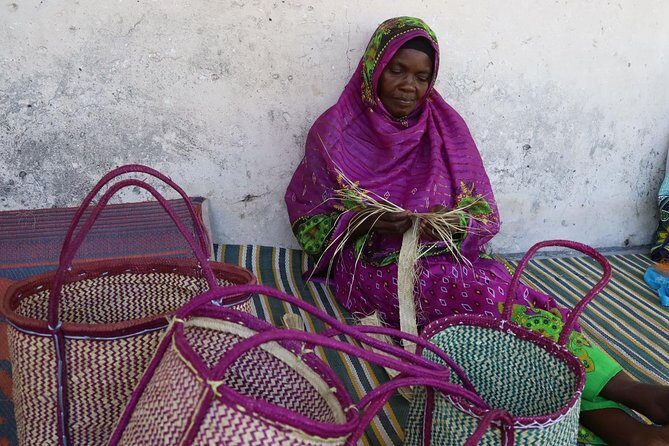
Next comes more fiber work. You’ll see palm leaf and makuti weaving and also traditional handmade kofia sewing. These aren’t just one-off crafts. They’re skills that take time, patience, and repetition.
What I like about this segment is the variety. You’re not doing the same demonstration four times in a row. You’re moving between different handiwork tasks, so your brain stays engaged. You also get a better sense of the range of what local women make.
If you’re hoping to ask lots of questions, this is a good time to do it. With a private guide, you can steer the conversation toward how the materials are prepared and what’s involved in the steps you’re seeing.



Kanga garment lesson: learning the wrap that shapes the look
The tour includes a demonstration on how to wear a kanga, the traditional garment. This is one of those experiences that sounds small until you see how it’s done.
There’s real value in being taught rather than copying. You’ll get the basics of how to position and wear the wrap so it looks right and feels correct. Even if you never plan to wear one yourself later, this lesson teaches you how clothing carries local style and meaning.
Also, pay attention to the way your guide explains it. They’ll likely emphasize practical points—how it fits, how it holds, and what to avoid. That’s the kind of detail you won’t get from a quick shop purchase.
Henna painting demo: a short cultural art moment that feels personal
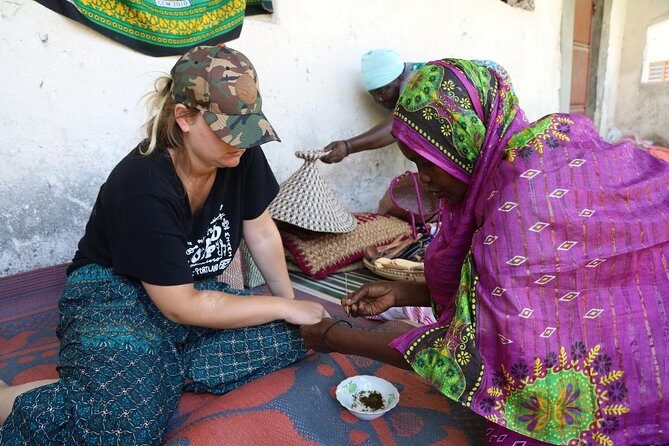
You’ll also see a demonstration of henna painting. Henna is part art, part ritual, and it often feels more personal than some other crafts because it ends up on skin.
What you’ll get here is a chance to watch technique and understand how the decoration is applied. Even if you don’t get your own design (the info provided only promises a demonstration), it still adds a nice cultural layer that rounds out the day.
If you’re someone who likes small, skill-based experiences, this part is a comfortable add-on. It doesn’t require long attention spans, and it gives you a visual souvenir memory even after you go back to your hotel.
Optional lunch in a women’s house: worth it, but plan ahead
You can arrange lunch in one of the ladies’ houses, but it’s extra cost and requires planning. You’ll need 48 hours notice, and you also need to share any dietary requirements in advance.
This is one of the best ways to make the day feel complete. Crafts are great, but food often tells you the most about a household’s rhythm. Still, it’s not something to toss into the plan at the last minute. If you want it, request it early.
If you have special dietary needs, send the details clearly when you confirm. The tour info is explicit that dietary requirements should be communicated when arranging lunch.
Price and value: what $32.65 buys you (and what it doesn’t)
At $32.65 per person, this tour is priced like a serious local-guided experience, not a high-markup “cultural show.” The big reason is what’s included: a private local guide and the structure that takes you to women’s homes and into specific crafting and village activities. The admission ticket is listed as free.
Two more value notes:
- It’s private, so you’re not paying for a seat in a crowded group
- There’s a mobile ticket and group discounts, which can make it more affordable if you’re traveling with friends
What’s not included is just as important. There’s no hotel pickup included. Pickup from your Stone Town hotel starts at $45 extra. That can change the real cost depending on where you’re staying and how you plan to get to Jambiani.
So when you’re judging value, do the math on your total travel day:
- If you’re self-transporting to Jambiani, this stays very good value
- If you need pickup, you’ll want to fold that into your budget
Getting to Jambiani from Stone Town: don’t underestimate time
Most people will base themselves in Stone Town, so you’ll have to think about transport. Pickup is available as an extra (starting at $45), and the guide is local, but the ride itself isn’t included.
Because the tour is only 2–3 hours, time spent driving can eat into the day’s “walking and seeing” portion. If you’re working with tight schedules—like dinner reservations—plan for the travel gap.
For your comfort, treat this as a village walk day. You’ll want to be ready to move, step around homes and craft spaces, and follow the pace the guide sets.
Who should book this tour (and who should skip it)
This is a strong match if you want:
- A village-focused experience instead of a beach-only Zanzibar day
- Craft learning you can actually watch—rope-making, weaving, sewing
- Cultural context around clothing (kanga) and art (henna)
It’s also a good pick if you like meeting real people with real roles in their community, especially when the guide comes from the village and can explain what you’re seeing.
You may want to skip or choose something else if:
- You can’t walk more than around 2 km
- You don’t handle weather changes well, since it depends on good conditions
- You’re looking for a fast, checklist “see it all” tour—this one is slower by design
Should you book Jambiani Village Women at Work and Play?
If you care about value, authenticity, and learning through watching, I’d book it. The craft chain—from seaweed work to coconut husk rope and doormats to weaving and sewing—gives you more coherence than most half-day “culture” tours. And because it’s private, your guide can tailor the pace and questions.
The main reason to pause is logistics: the tour isn’t long, so transport time matters, and pickup costs extra. Also, be honest about your walking comfort. If you’re okay with a moderate walk and you can schedule around good weather, this is the kind of Zanzibar day that sticks.
If you’re interested in lunch, request it early and be specific about dietary needs—this is one of those experiences where preparation directly improves your result.
FAQ
How long is the Jambiani village tour?
It’s about 2 to 3 hours, depending on the flow of the visit.
How much does it cost?
The price is $32.65 per person.
Is pickup from Stone Town included?
No. Pickup from your Stone Town hotel is available for an extra charge starting at $45.
Can I add lunch, and how far in advance do I need to plan?
Yes, lunch can be arranged in advance in one of the ladies’ houses for an extra fee. You need 48 hours notice, and you should share any dietary requirements.
Is this tour private?
Yes. It’s a private tour/activity, so only your group will participate.
What happens if the weather is bad?
The experience requires good weather. If it’s canceled due to poor weather, you’ll be offered a different date or a full refund.