REVIEW · IRINGA REGION
1-Day Isimila Stone Age Site
Book on Viator →Operated by Wild Gaze Safaris Limited · Bookable on Viator
Stone tools, dated by time, not imagination.
I love how this trip turns a visit into a real-time lesson on Isimila and early human life. You’ll be looking at evidence right where it was found, among dramatic eroded sandstone formations and a small museum that helps you connect the dots.
Two things I especially like: you get clear context (site + museum), and the day is low-stress thanks to private transportation plus lunch and bottled water. One drawback to plan for: it’s about an 8-hour day, so bring comfortable walking shoes and expect a bit of time on your feet.
In This Review
- Key Highlights You Should Know Before You Go
- Isimila Outside Iringa: Why This One Day Feels Like More
- Getting There From Iringa: Timing, Pickup, and How to Plan Your Morning
- The Isimila Stone Age Site: What You’ll See on the Ground
- The Museum Stops: Small Displays That Actually Explain Things
- Lunch, Water, and the Pace of an 8-Hour Day
- Private Transportation and Parking: The Quiet Value of Fewer Headaches
- Price and Value: Is $87.18 a Smart Deal?
- Who Should Book This One-Day Isimila Trip?
- Should You Book the 1-Day Isimila Experience?
- FAQ
- How long is the 1-Day Isimila Stone Age Site trip?
- What time does the tour start?
- Where is Isimila, relative to Iringa?
- What is the price per person?
- What’s included in the tour?
- What do I receive for tickets?
- Can I cancel for a full refund?
Key Highlights You Should Know Before You Go
World-famous Stone Age tools, dated tens of thousands of years in the exact setting where they were uncovered.
A small museum with well-captioned displays that makes the archaeology easier to understand.
Private transport and included lunch so you can focus on the site instead of logistics.
Admission ticket included with your day trip, so you’re not scrambling at the gate.
A straightforward 7:30am start that helps you make the most of daylight for the walk and exhibits.
Isimila Outside Iringa: Why This One Day Feels Like More
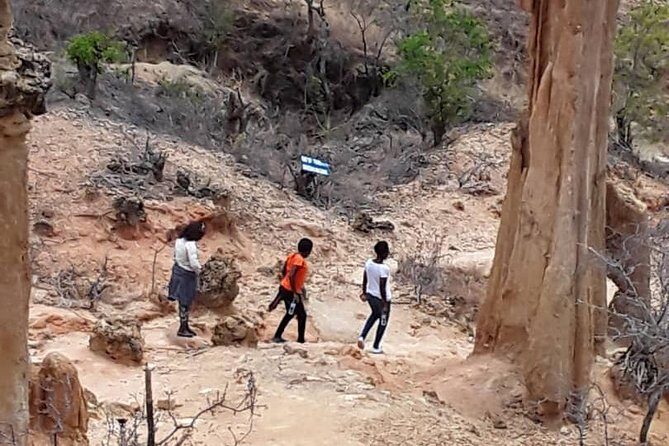
Isimila is a quick hop from Iringa, just 21 kilometers away, but it feels worlds away once you arrive. The heart of the experience is simple: you’re shown Stone Age tools—hammerstones, axeheads, flints, and scrapers—associated with discoveries estimated around 60,000 to 100,000 years old. That’s the kind of timeline that’s hard to grasp from a museum alone, so seeing the finds in their setting is the main value of this day.
What makes it especially satisfying is the combination of outdoor archaeology and a compact museum. If you’re the type who likes to understand how something was discovered (not just what was found), you’ll appreciate that the day is set up to help you picture the process—how evidence ends up studied, dated, and interpreted. The site itself offers the visual anchor: eroded sandstone pillars and rock formations that frame the story of early life in the region.
There’s also a very practical reason to do it as a one-day trip: it’s built to be uncomplicated. You don’t need to manage transport, parking, or entry. And you’re not left to guess what to look for—your visit is structured around the most meaningful pieces: the site walk and the museum.
A few more Iringa Region tours and experiences worth a look
Getting There From Iringa: Timing, Pickup, and How to Plan Your Morning
The day runs for about 8 hours, starting at 7:30am. Pickup is offered, and the operator uses private transportation, which matters more than people think. In this part of Tanzania, time lost to casual coordination adds up fast. With private transport, you stay on schedule and spend more of the day at Isimila instead of waiting.
Because the tour begins early, you’ll want to treat the morning like it’s a full outing, not a casual late start. Even if you don’t consider 7:30am early, you’ll likely feel the pace once you’re moving. Comfortable shoes help here, too—your time at the site includes a walk through sandstone formations, and you don’t want to be thinking about sore feet for the rest of the day.
You’ll also have a mobile ticket, so plan for that on your phone or device. If you’re traveling with low battery anxiety, bring a charged power bank just in case. The day is also designed to be convenient for how you travel through Iringa: the meeting point is near public transportation, which can be helpful if you’re not starting with the pickup.
If you like spontaneity and local wandering, note that some guests have paired their Isimila day with extra time around Iringa sights (like the German Market). Your main focus should stay on Isimila, but it’s good to know that the day can sometimes bend toward additional browsing depending on how your schedule lands.
The Isimila Stone Age Site: What You’ll See on the Ground
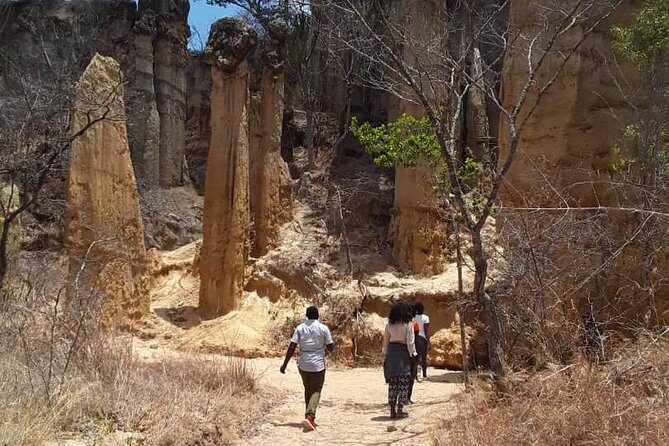
This is the reason to choose the trip: Isimila shows Stone Age evidence where archaeologists found it. In the late 1950s, tools were uncovered in the dramatic setting of eroded sandstone pillars. The kinds of items you’ll hear about—hammerstones, axeheads, flints, and scrapers—are exactly the practical objects you’d expect from daily life long ago.
What I like about the way this works for your understanding is that the site doesn’t feel like generic “rocks and walking.” You’re given enough direction to connect the physical place to the tool discoveries. The tools are estimated between 60,000 and 100,000 years old, and that range is part of the story: you’re learning about very old human activity, not a neat, single-date event.
At Isimila, your experience will likely include:
- Time on site to look at the sandstone formations that frame the discoveries
- An explanation of what archaeologists found and why the location matters
- Enough structure to make the walk meaningful, not just scenic
One consideration: this isn’t a sit-down museum day. You’ll be walking around the formations and absorbing information in the field. If you know you get tired on uneven ground, wear shoes with grip and plan for a steady pace. Bring water habits in mind too—your tour includes bottled water, but you’ll still feel better if you sip consistently during the walk.
The Museum Stops: Small Displays That Actually Explain Things
Right at Isimila, there’s a local museum with small displays and clear captions. That sounds modest, but it’s often the difference between a confusing visit and a satisfying one. When you’re seeing ancient tools and hearing about archaeological work, you need a translation layer. The museum provides it.
The exhibits focus on discoveries from the area and help connect the tools you hear about to the bigger picture of Stone Age society. The captions are described as well done, and that matters because the museum is likely the moment when many visitors can straighten out questions—What exactly am I looking at? How do these tools fit early human life? Why does context matter for dating and interpretation?
If you’re curious about how archaeologists work (as opposed to just what they found), you’ll also appreciate that the day is built to show the archaeology process at work. Even if you’re not an academic, you can still learn the basics of how sites get studied and why scientists care about location, layers, and evidence.
The museum also gives you a break from the outdoor walk. You’ll likely come away with a clearer story than you’d get from photos alone.
Lunch, Water, and the Pace of an 8-Hour Day
A good day trip handles the “in-between” parts. Here, lunch and bottled water are included, which keeps you from hunting for food or losing momentum. It also helps you avoid the classic mistake: rushing through the visit because you’re hungry and dehydrated.
Because the tour lasts around 8 hours, the schedule tends to feel like a proper day out rather than a quick outing. That’s not a bad thing—it’s what gives you enough time for both the site walk and the museum visit. But it does mean you should plan your energy. Eat before you start if you can, or be ready for the day to begin and then settle into a rhythm of walking, learning, and then lunch.
From a comfort standpoint, included lunch and water are a value booster. You’re not trading off your experience for basic needs. You’re more likely to actually enjoy the explanations and take in the place instead of focusing on logistics.


Private Transportation and Parking: The Quiet Value of Fewer Headaches
The tour includes private transport and parking fees. That’s not glamorous, but it’s one of those details that decides whether your day stays pleasant or becomes stressful. With private transportation, you’re not sharing cars with strangers, trying to coordinate pickup times, or worrying about where to park.
You also get the included admission ticket, which keeps the day moving. And because it’s a private tour/activity, it’s only your group participating, which usually means your time at the site can be paced in a way that fits your group.
If you care about comfort and straightforward planning, this setup is a good match. If you’d rather be fully independent and have zero structure, you might find the included structure slightly limiting—but for most people, it’s exactly what makes the day feel smooth.
Price and Value: Is $87.18 a Smart Deal?
At $87.18 per person, this is priced like a guided, all-in day trip—not like a budget transfer. The real question is value: what are you getting for that money?
You’re getting:
- Admission ticket included
- Lunch and bottled water
- Private transportation
- Parking fees
- A mobile ticket for the experience
- A full day shape of about 8 hours, starting at 7:30am
So you’re paying for more than transport. You’re paying for time saved and for a guided structure that helps you understand what you’re seeing. For Isimila specifically, that matters because the site and museum are part of a single story: archaeology in the field plus explanation inside.
Would it be cheaper to DIY? Probably. But DIY would likely cost you time, fuel, entry coordination, and the effort of figuring out what to focus on. If you want to do Isimila without friction, the price looks reasonable, especially since your basic needs (lunch and water) are handled.
This is also the kind of day that rewards a thoughtful pace. If you’re rushed and confused, you’ll feel shortchanged. With the included structure, you’re more likely to leave feeling you actually understood the “why” behind the tools and the setting.
Who Should Book This One-Day Isimila Trip?
This trip fits best if you like:
- Real-world history tied to a physical place
- Clear explanations rather than just looking at objects
- A structured day trip that doesn’t require heavy planning
It’s also a good match if you want a day that’s meaningful but not overly demanding in terms of itinerary complexity. Most travelers can participate, and the site walk is part of the experience, not a special optional add-on.
If you’re traveling as a family, you’ll probably like the museum portion and the clear captions. If you’re traveling solo, the private setup can make the day feel calmer than crowded group tours. If you’re a history nerd, you’ll enjoy the archaeology process angle and the tool focus.
The only real mismatch is for people who hate any walking at all or who want a long, freeform day with no structure.
Should You Book the 1-Day Isimila Experience?
Yes—if you want an efficient, guided day focused on Stone Age evidence in its real setting, this is a smart booking. The value comes from the combination: site + museum + included lunch and water, all supported by private transport.
If your travel style is purely independent and you hate structured schedules, you might prefer a DIY approach. But if you want to understand what you’re seeing, keep the day comfortable, and avoid logistical hassles, this is an easy recommendation.
FAQ
How long is the 1-Day Isimila Stone Age Site trip?
It runs for about 8 hours.
What time does the tour start?
The start time is 7:30am.
Where is Isimila, relative to Iringa?
Isimila is about 21 kilometers outside Iringa.
What is the price per person?
The price is $87.18 per person.
What’s included in the tour?
Lunch, bottled water, private transportation, parking fees, and the admission ticket are included.
What do I receive for tickets?
You get a mobile ticket.
Can I cancel for a full refund?
Yes. You can cancel for a full refund up to 24 hours before the experience’s start time.